Ejjati · Own product
Localised, not mirrored.
The Arabic version of Ejjati. Arabic copy, AI states and voice input as a first-class language, with every bidirectional edge case a finance app can throw at a designer.
- Product
- Mobile app · Personal finance
- Role
- Founder and product designer
- Scope
- Arabic localisation, RTL adaptation, bidirectional component system
- Platform
- Consumer mobile app, Arabic
- Year
- 2026 · In progress
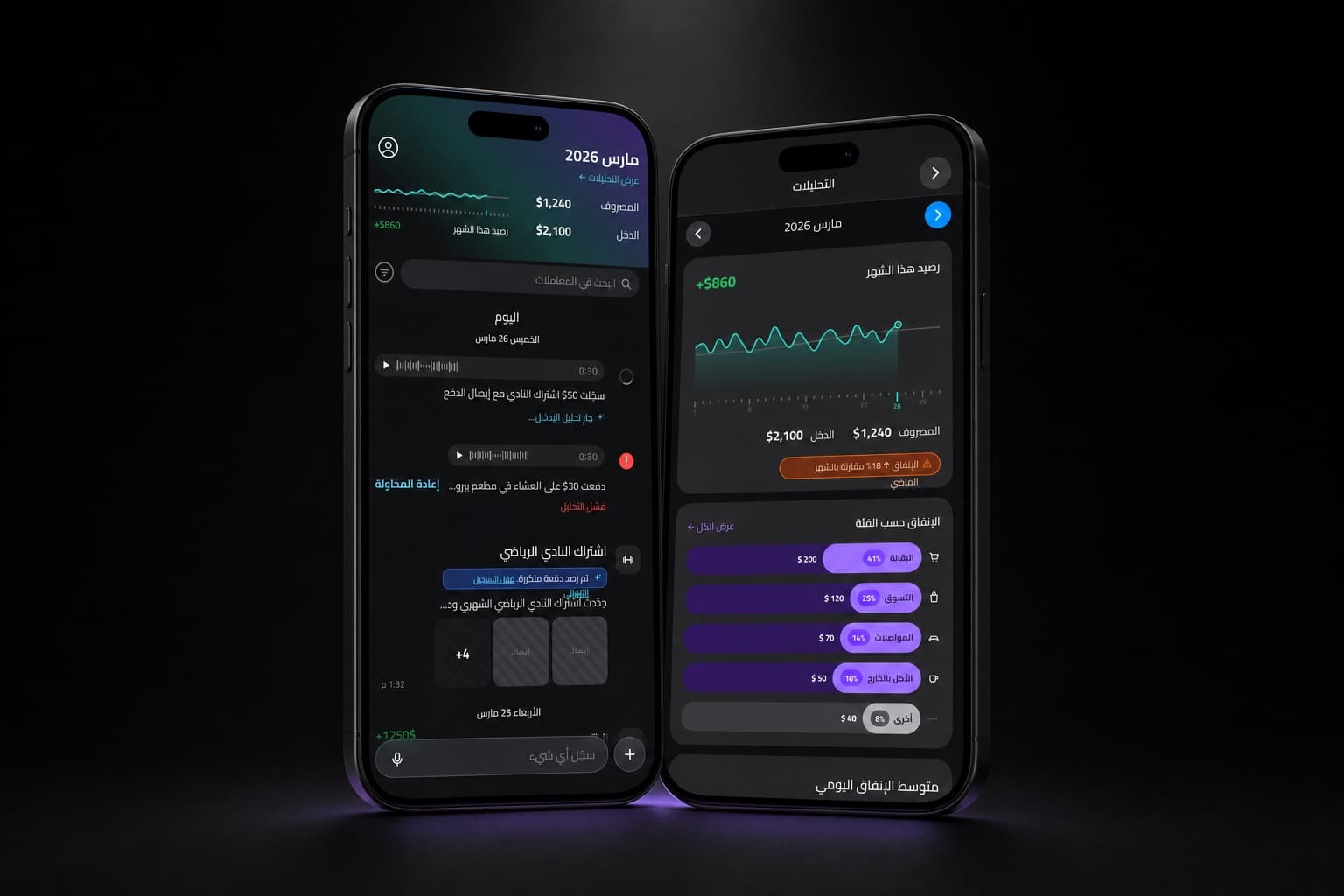
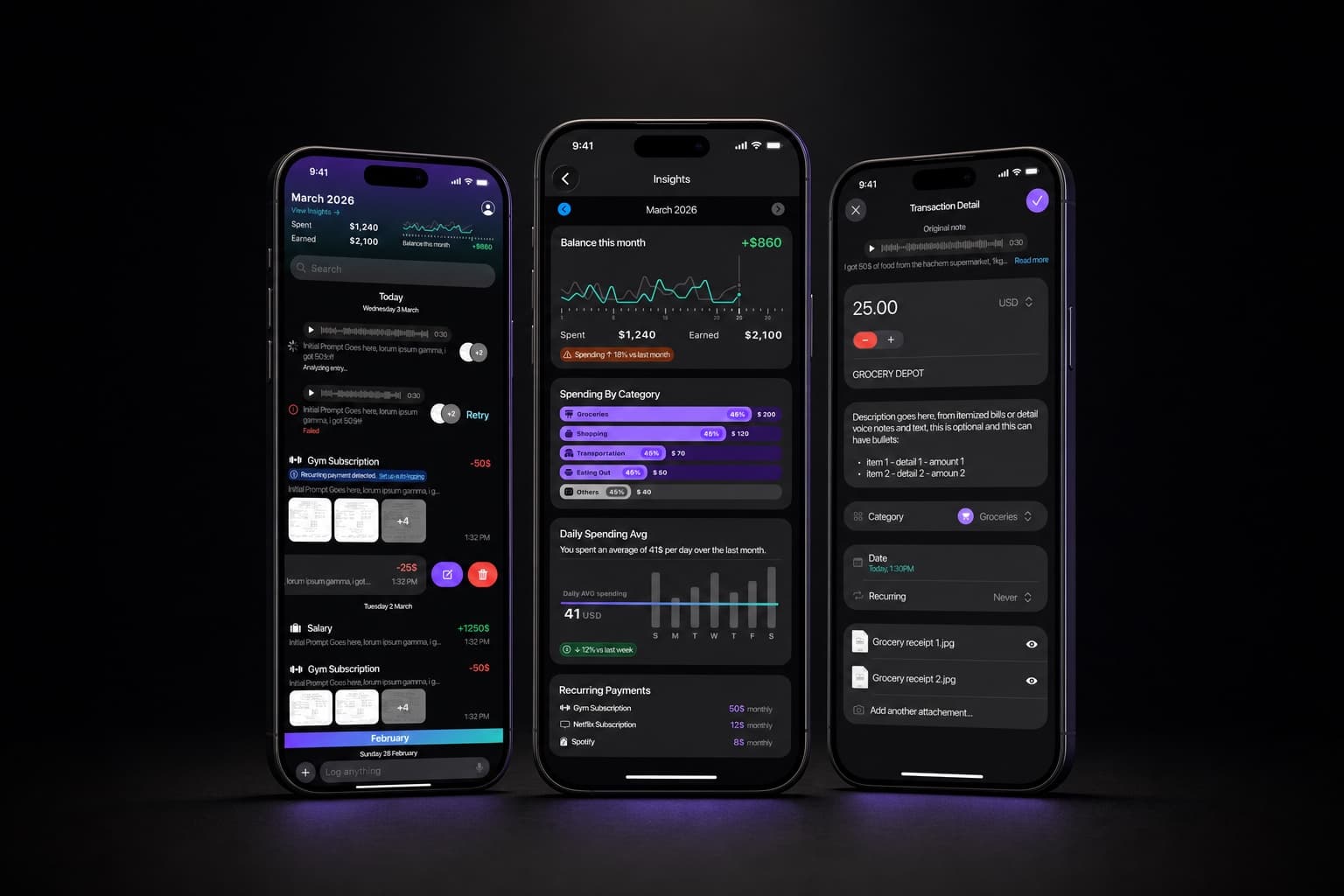
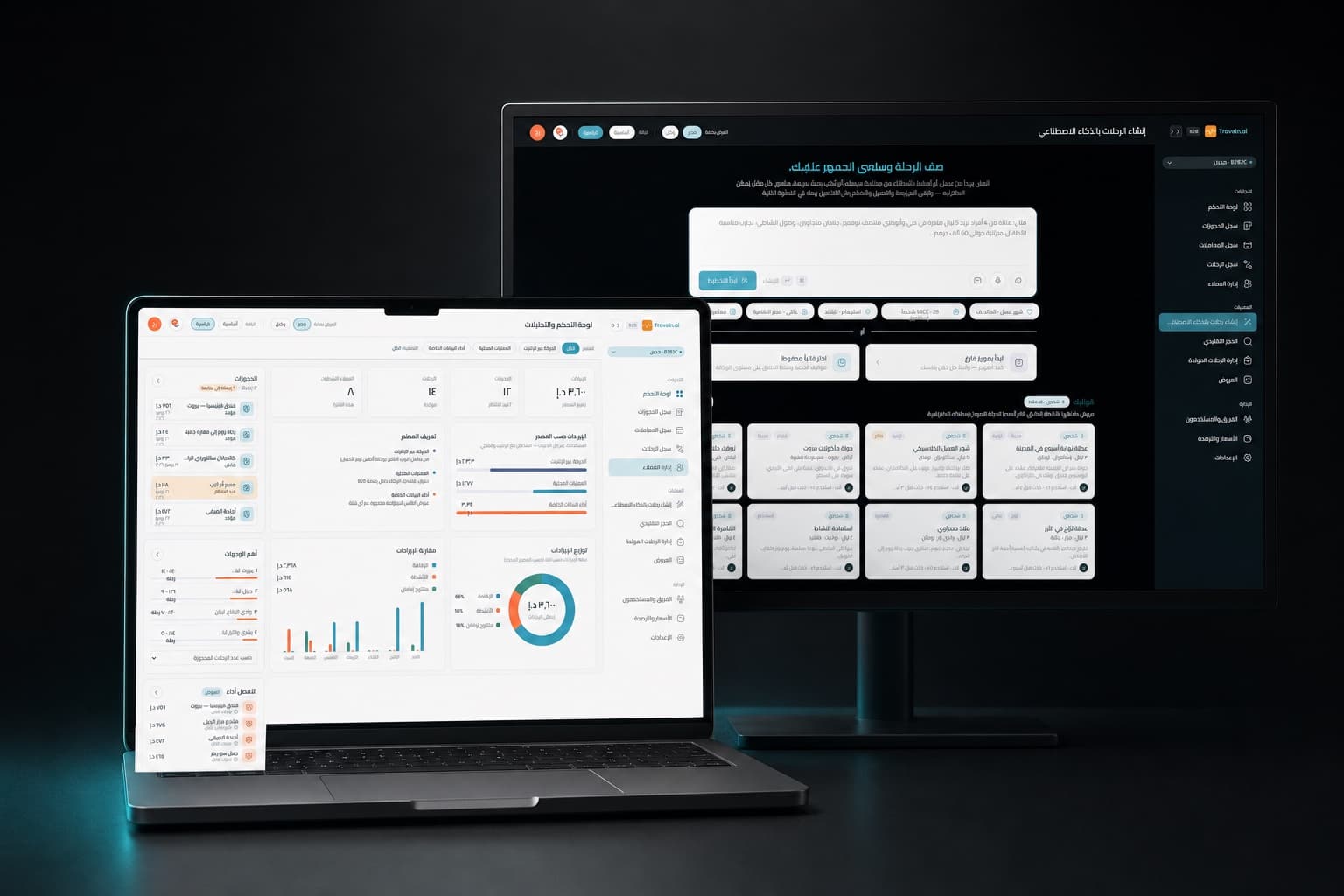
The Arabic sibling of Ejjati. Not a flipped layout with translated labels: a fully localised experience where Arabic is a first-class language in the copy, the AI states and the voice input.
Why finance apps are the hardest surface for Arabic
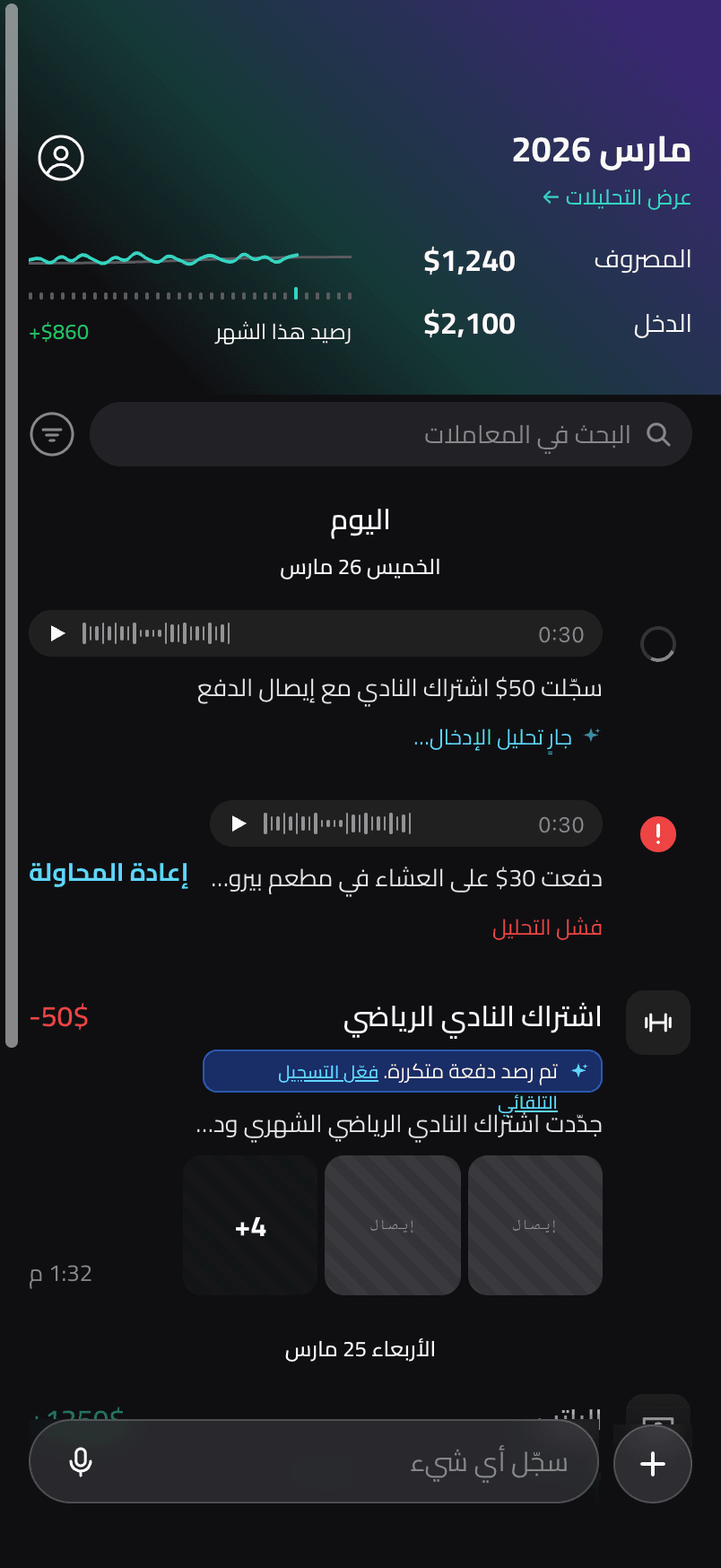
Expense tracking is bidirectional by nature. An Arabic sentence carries a dollar amount, an English merchant name sits inside Arabic copy, a filename mixes scripts mid-string, and a spending chart has a time axis. Every screen is a negotiation between two reading directions. Get one rule wrong and numbers become unreadable exactly where money is involved.
Key decisions
Latin numerals stay left to right, always.
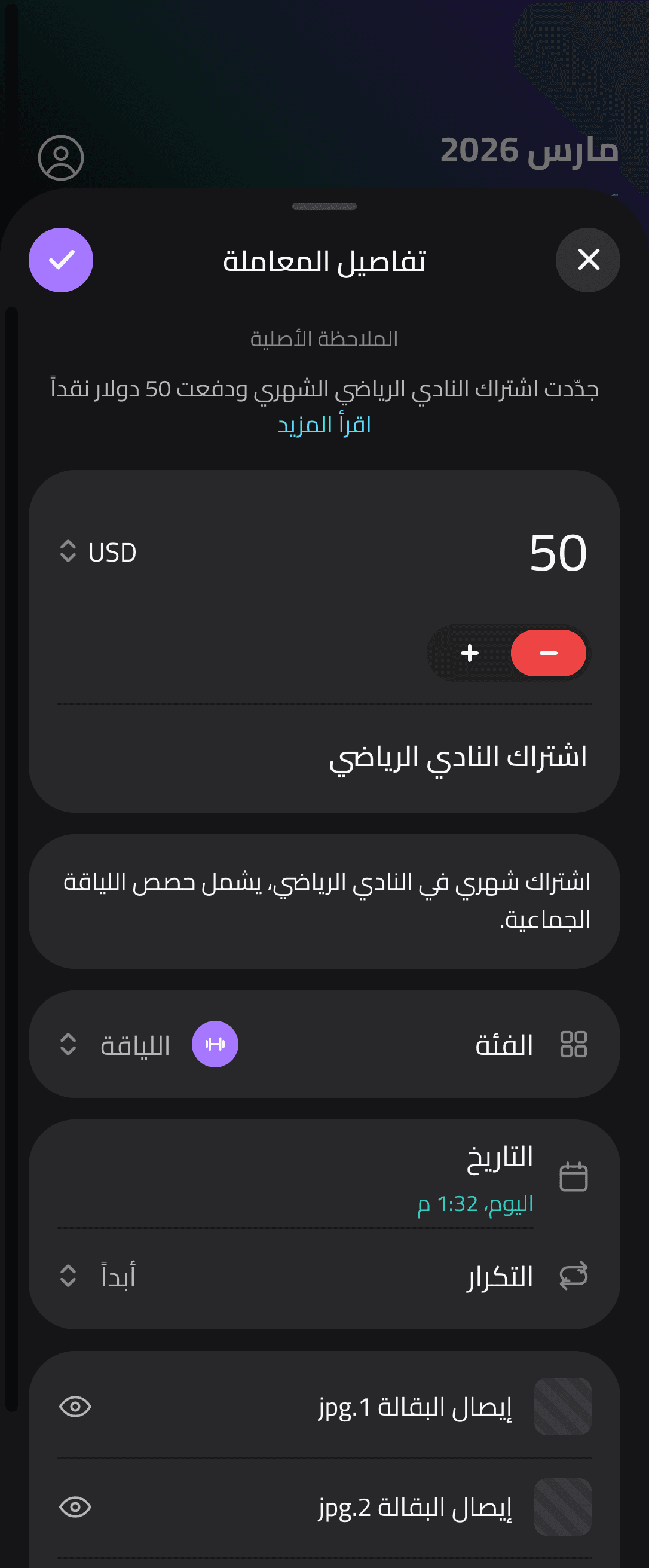
Amounts render as $1,240 and 50 USD even inside right-to-left sentences. Money must be scannable at a glance. Forcing amounts into the Arabic flow, or into Eastern Arabic numerals, would trade familiarity for consistency and lose both.
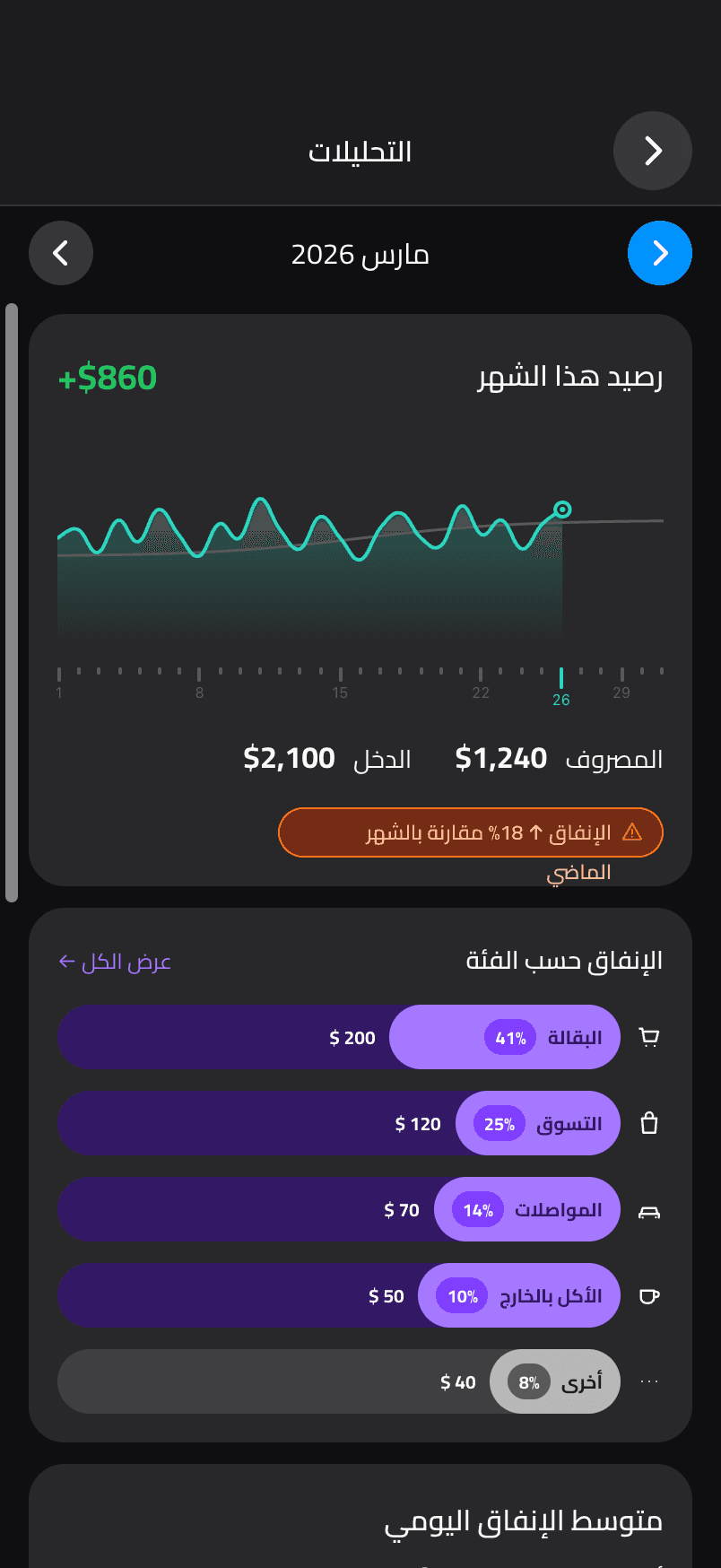
Charts do not mirror.
The balance trend and daily spending charts keep their left-to-right time axis while the interface around them mirrors. Time reads left to right in every chart people have seen. Mirroring the data would break trend reading, not localise it.
Everything else mirrors fully.
Navigation chevrons, back actions, input alignment, icon slots, list anatomy and the voice bar. The component system was rebuilt direction-aware, not flipped screen by screen.
AI trust copy is localised, not translated.
The states that earn trust in the English app speak natural Arabic: جارٍ تحليل الإدخال، فشل التحليل، إعادة المحاولة، تم رصد دفعة متكررة. An AI product lives or dies on how it communicates uncertainty, so that had to feel native.
Voice first works in Arabic.
The core promise, سجّل أي شيء, carries over. People speak Arabic naturally and the parsed transaction keeps the original Arabic note, playable, exactly like the English experience.
Services in this project
What we did
Have a product like this?
We reply by email to set up a call. Most projects start with a short conversation and a scoped proposal.