Ejjati · Own product
Expense tracking you can talk to.
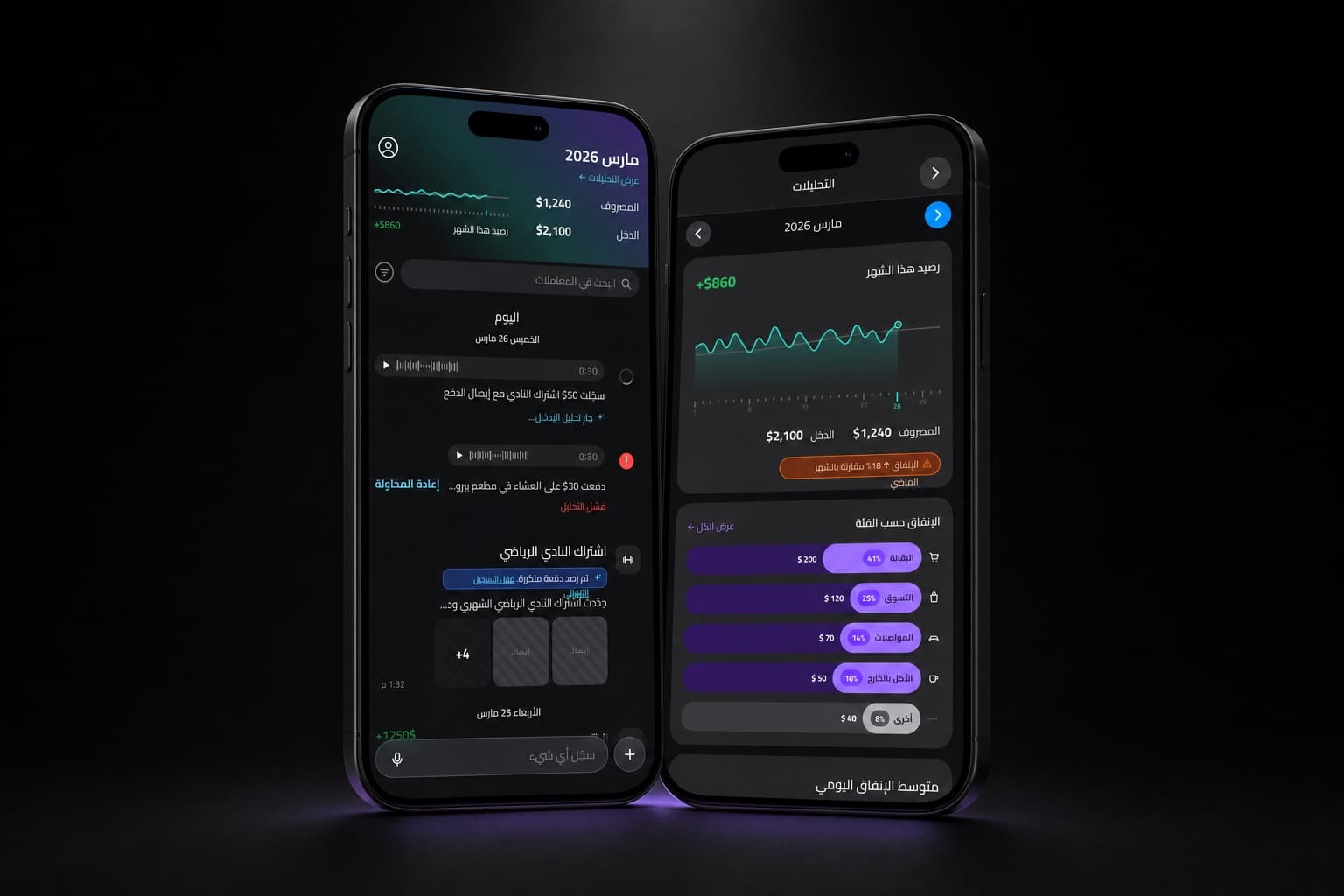
AI expense tracker, our own product. Say or type what you spent and it logs it, keeps the original note, and spots recurring payments on its own.
- Product
- Mobile app · Personal finance
- Role
- Founder and product designer
- Scope
- Market research, branding, UX and UI, design system
- Platform
- Consumer mobile app
- Year
- 2026 · In progress
The situation
Expense trackers die in the same place: manual entry. People download them motivated, log for a week, then stop, because typing amounts into category forms after every coffee is a chore nobody keeps up. Ejjati is our own answer: an AI-first tracker where you say or type what happened, such as 'I got $50 of food from the Hachem supermarket', and the AI does the bookkeeping.
The problem
Make logging so light that it survives week two. That means capture in any form, whether a voice note, free text or a receipt photo, AI parsing into structured transactions, and intelligence that works for the person: detecting recurring payments from their logs instead of asking them to configure anything.
The same process, applied to our own product
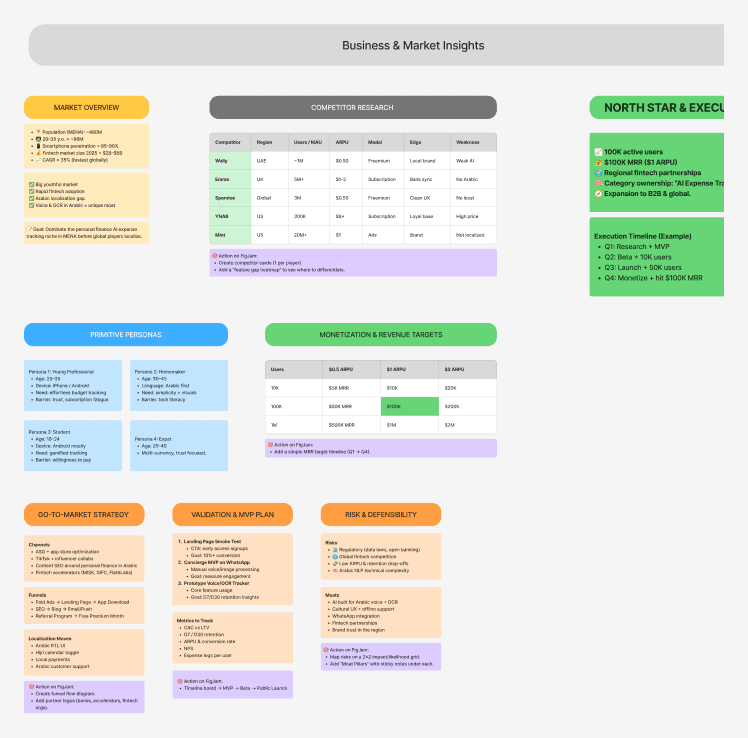
Business and market insights first.
Before any interface: market mapping, a North Star and an execution map, and honest answers about where an independent product can win against incumbents.
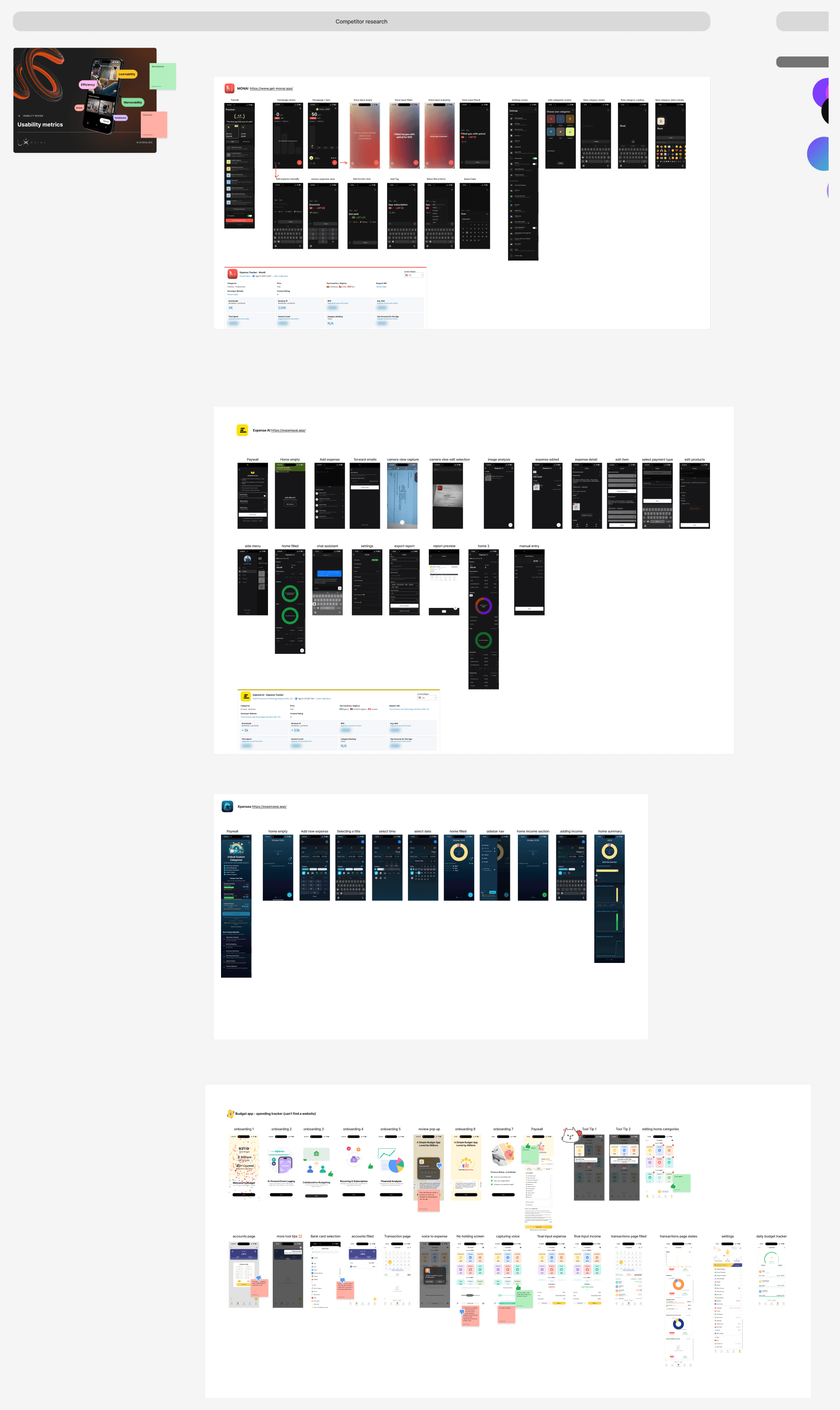
Competitor benchmark.
The leading trackers dissected screen by screen, to see where their logging flows create the friction that kills retention.
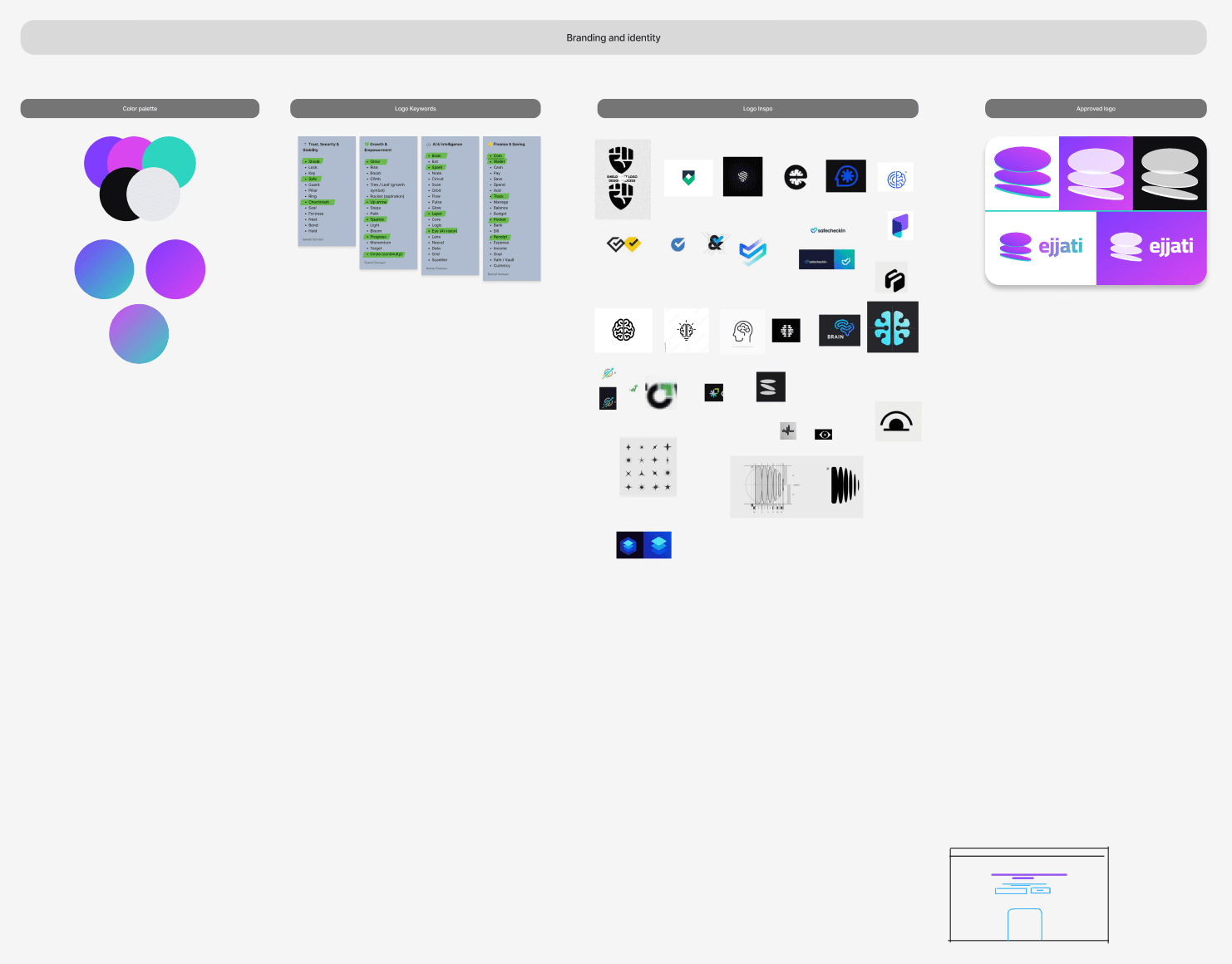
Branding and identity.
Name, logo exploration and a palette built for a dark, focused interface.
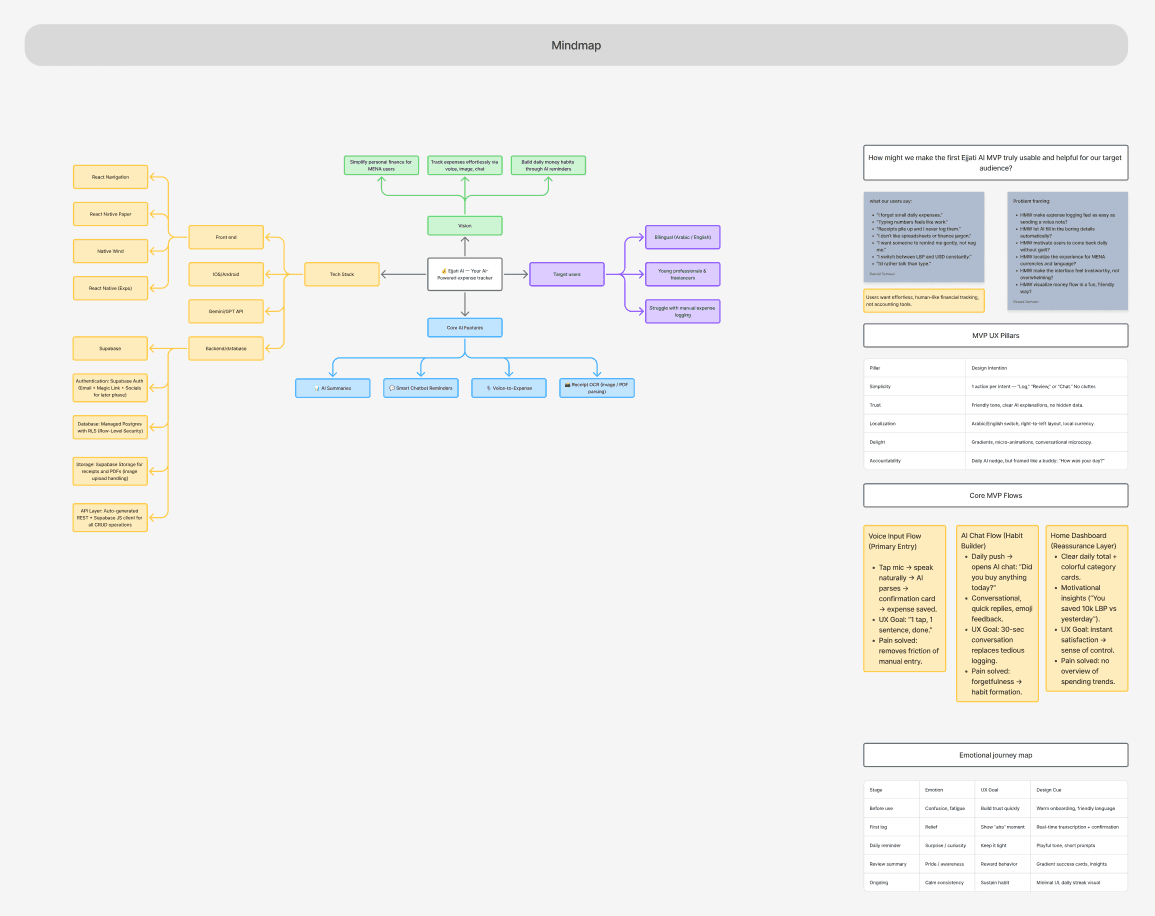
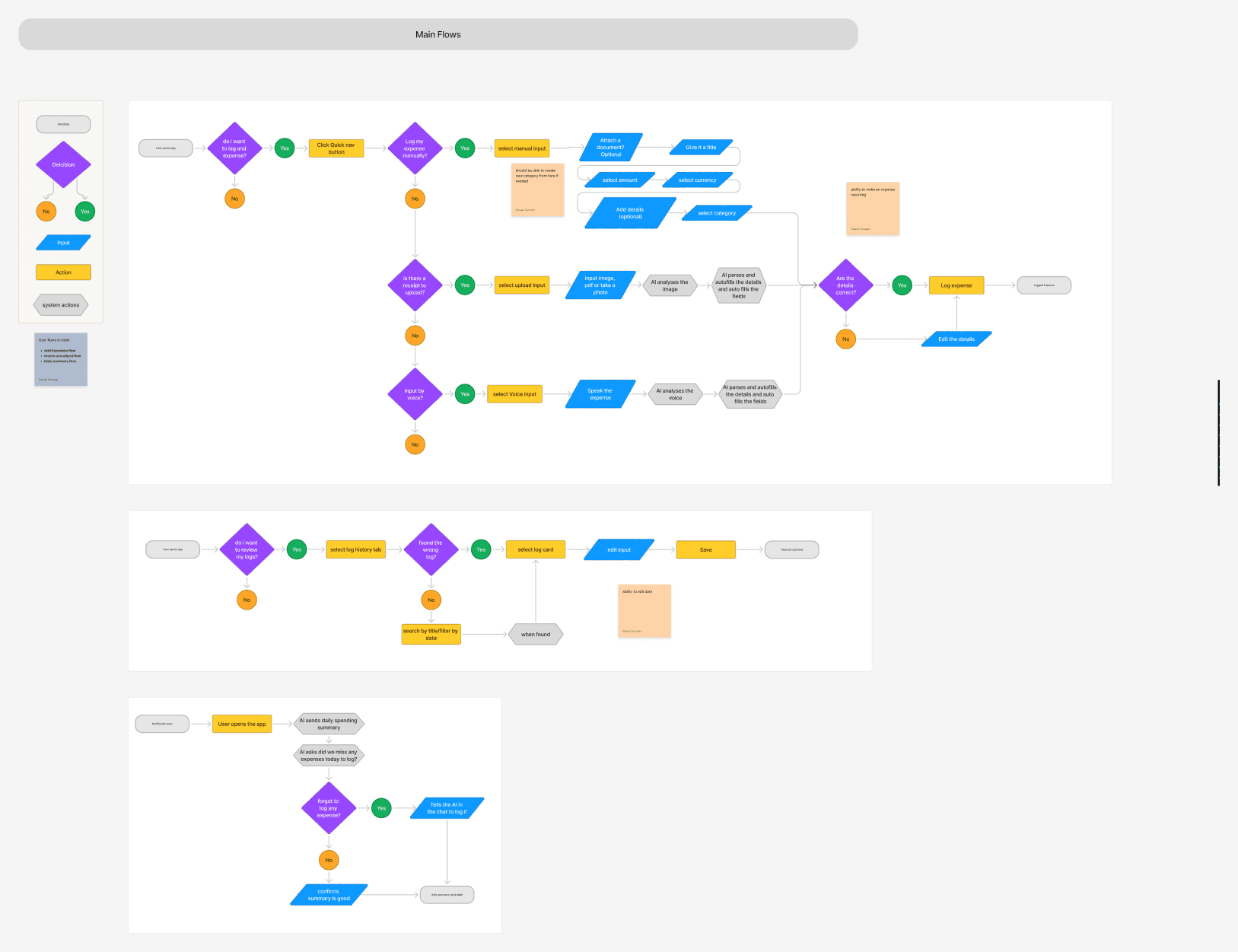
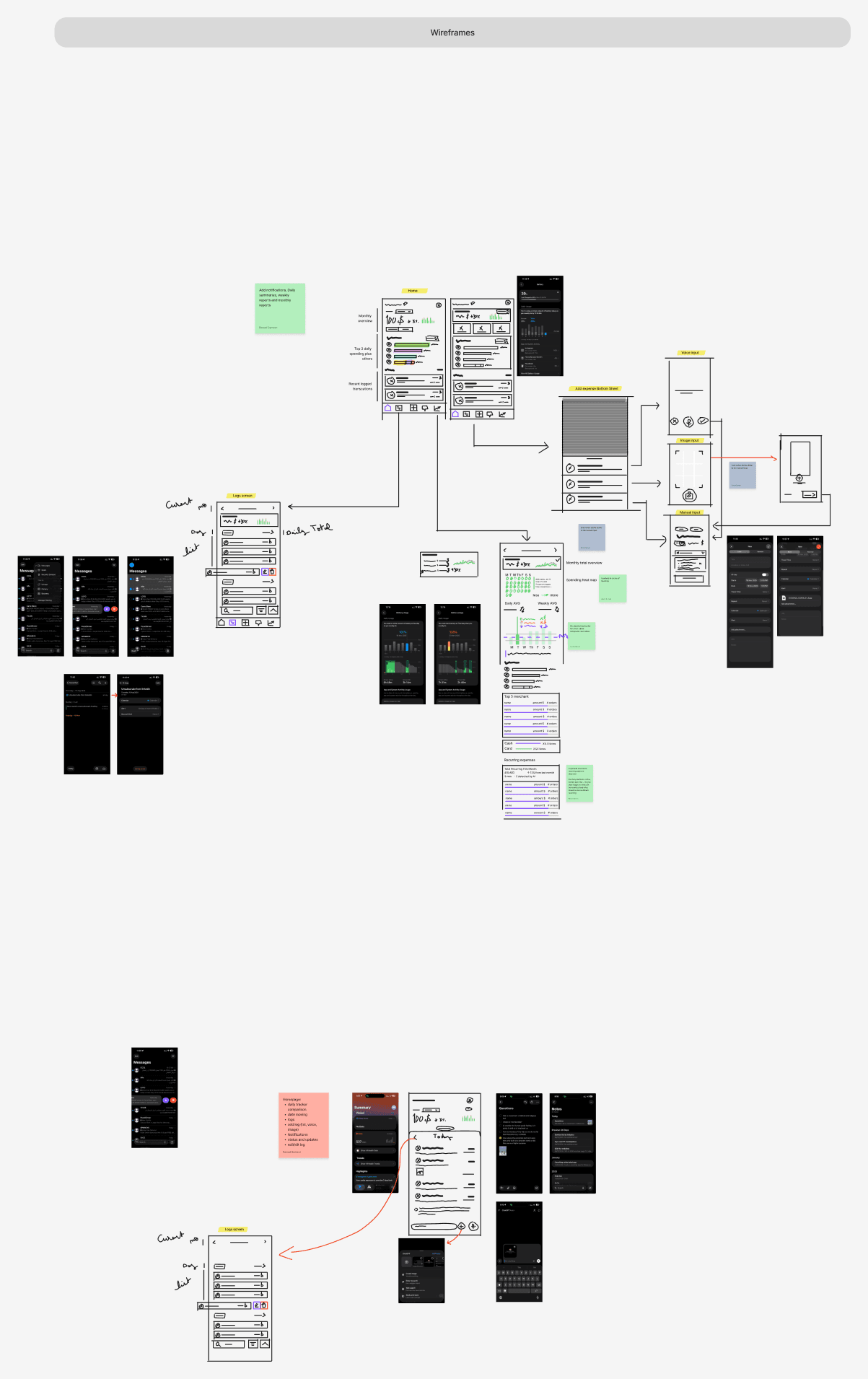
Mind map, flows, wireframes.
Feature scope pressure-tested in a mind map, main flows drafted, then wireframed.
Key decisions
'Log anything' is the interface.
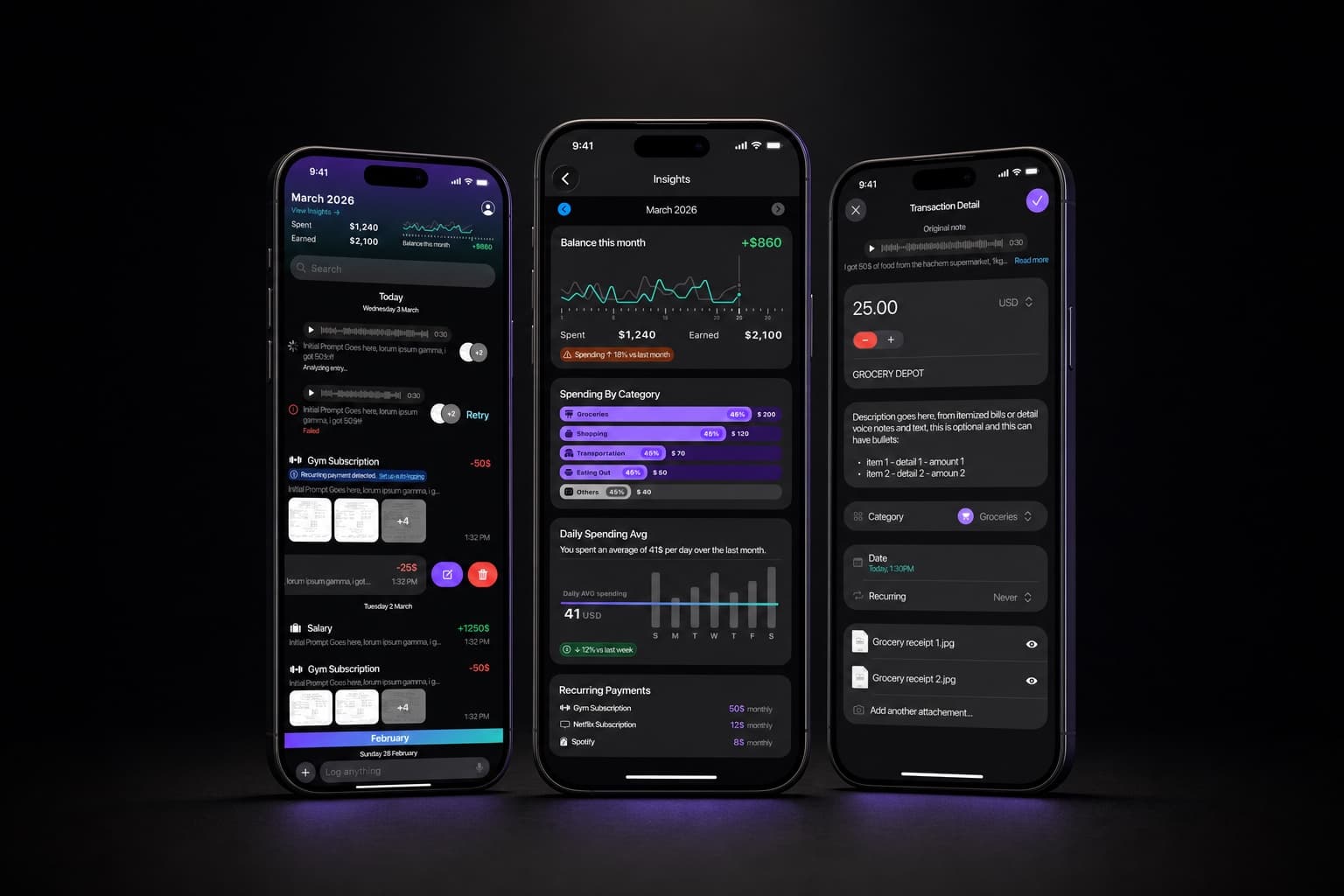
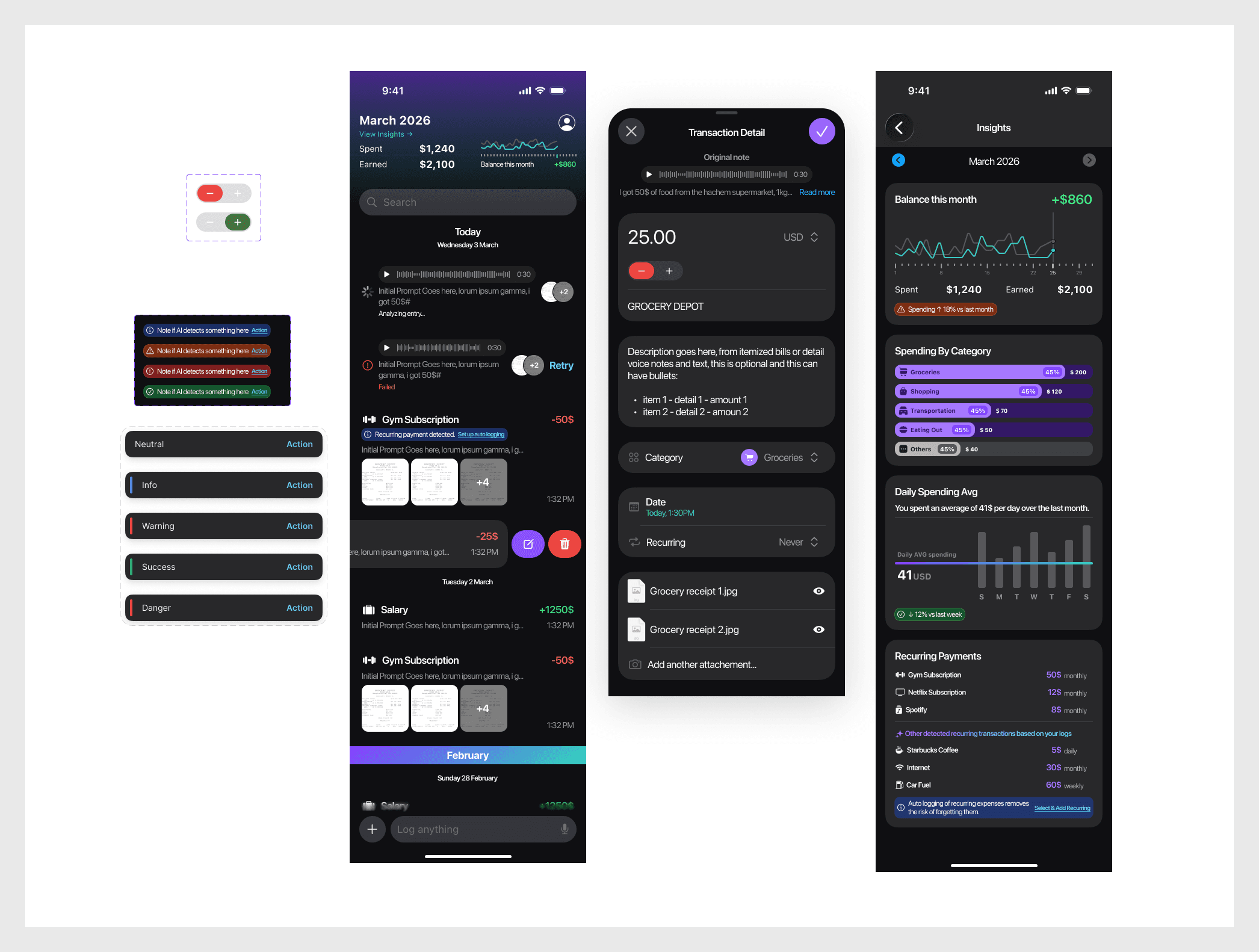
The home screen is a feed with one input: voice, text or photo. Logging feels like messaging, not accounting. The AI states are honest, from analysing to failed with retry, because trust in AI parsing is earned through clear feedback.
The original note stays.
Every parsed transaction keeps its source attached and playable, whether a voice note, the raw text or the receipts. People can always check what the AI understood.
Intelligence without configuration.
Recurring payments, from the gym to the daily coffee, are detected from logging patterns and offered with one-tap setup. The app learns instead of asking.
Insights that speak plainly.
'You spent an average of $41 a day over the last month', with spending by category and month-over-month warnings. Read in seconds, not studied.
Open files
This is the one case study with open files. Browse the research board and the main design file yourself.
Services in this project
What we did
- AI product designChat, copilot, agent and generative interfaces people can follow and correct.→
- Dynamic design systemsComponents, states and rules for interfaces a model assembles at run time.→
- Mobile app designiOS and Android apps, including super apps.→
- UX research and strategyUser interviews, usability testing and product strategy.→
More work
Related case studies
Have a product like this?
We reply by email to set up a call. Most projects start with a short conversation and a scoped proposal.