MAP · Client project
A car-parts marketplace mechanics can actually use.
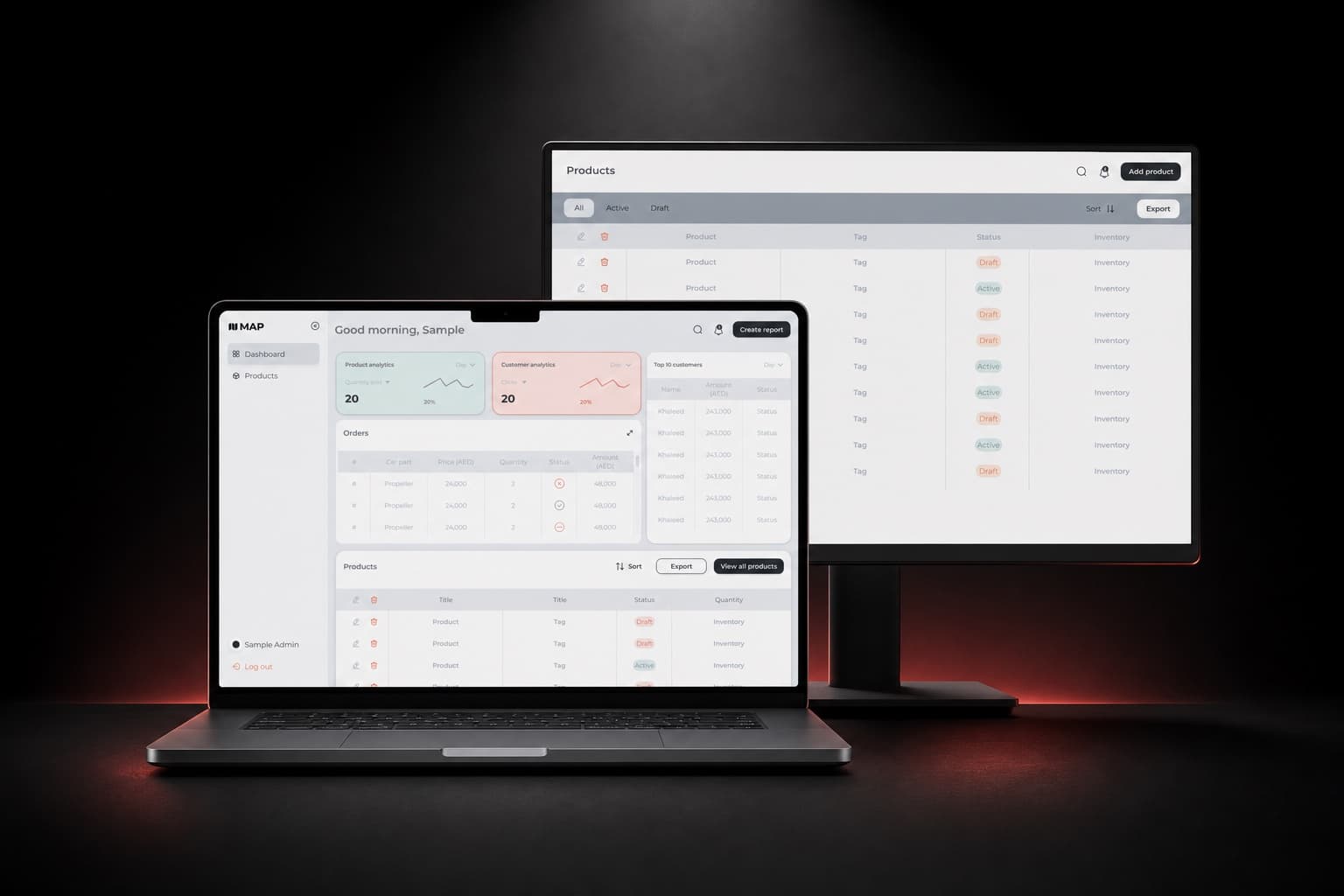
Car-parts marketplace in Dubai with AI demand prediction. Structured categories, search that works for mechanics, and pre-ordering so parts arrive faster. Designed in eight weeks with the supplier dashboard.
- Product
- Web app · Automotive
- Role
- Product design
- Scope
- UX research, product strategy, UI design, design system, interaction design
- Platform
- Responsive web marketplace
- Year
- 2024 · Shipped
- Timeline
- Eight weeks, marketplace and dashboard together
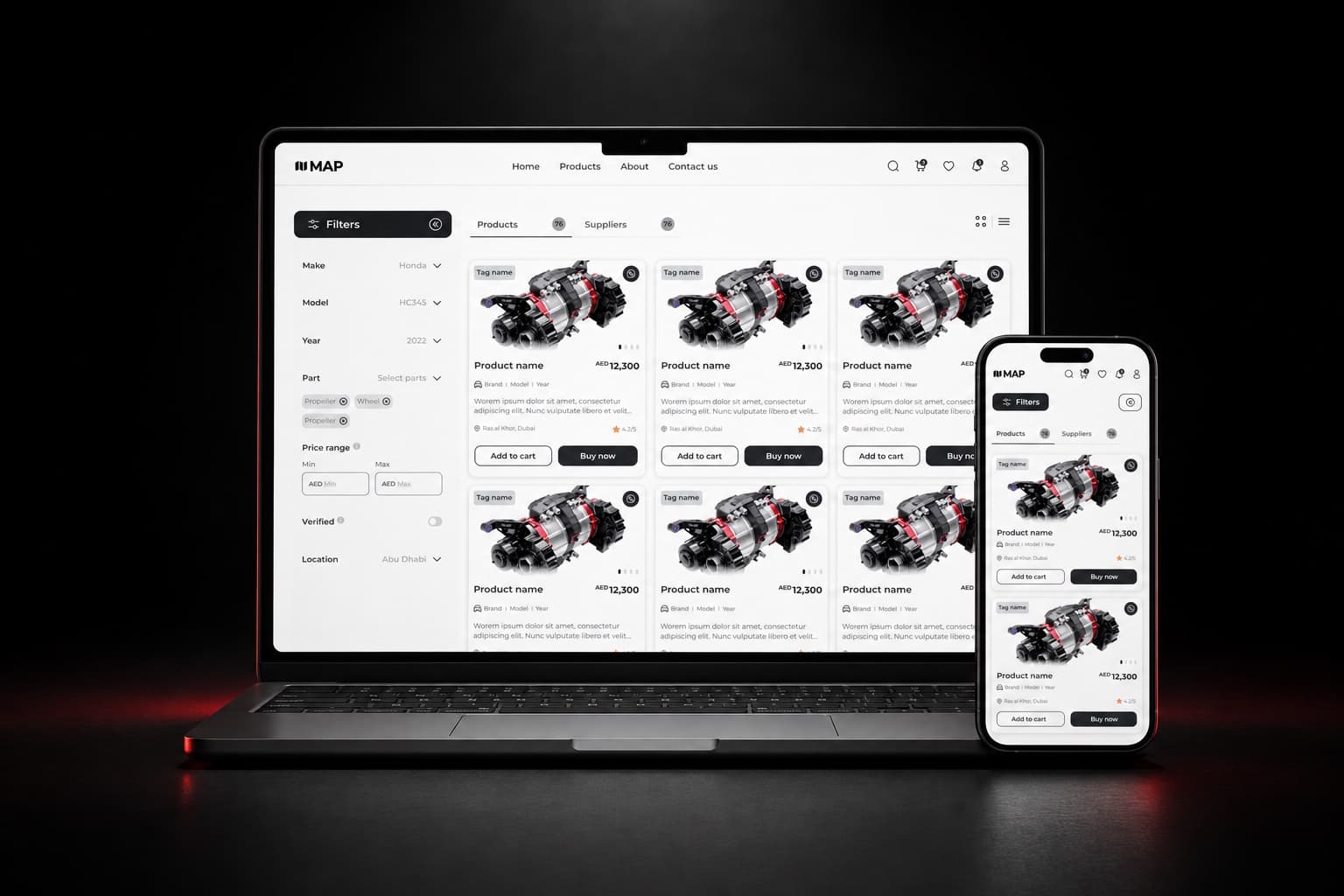
The situation
MAP is a car-parts marketplace in Dubai. Parts ordered from overseas took too long to arrive and local suppliers charged too much. The existing websites were hard to use, especially for mechanics who are not comfortable with technology, and had weak search and navigation.
The solution
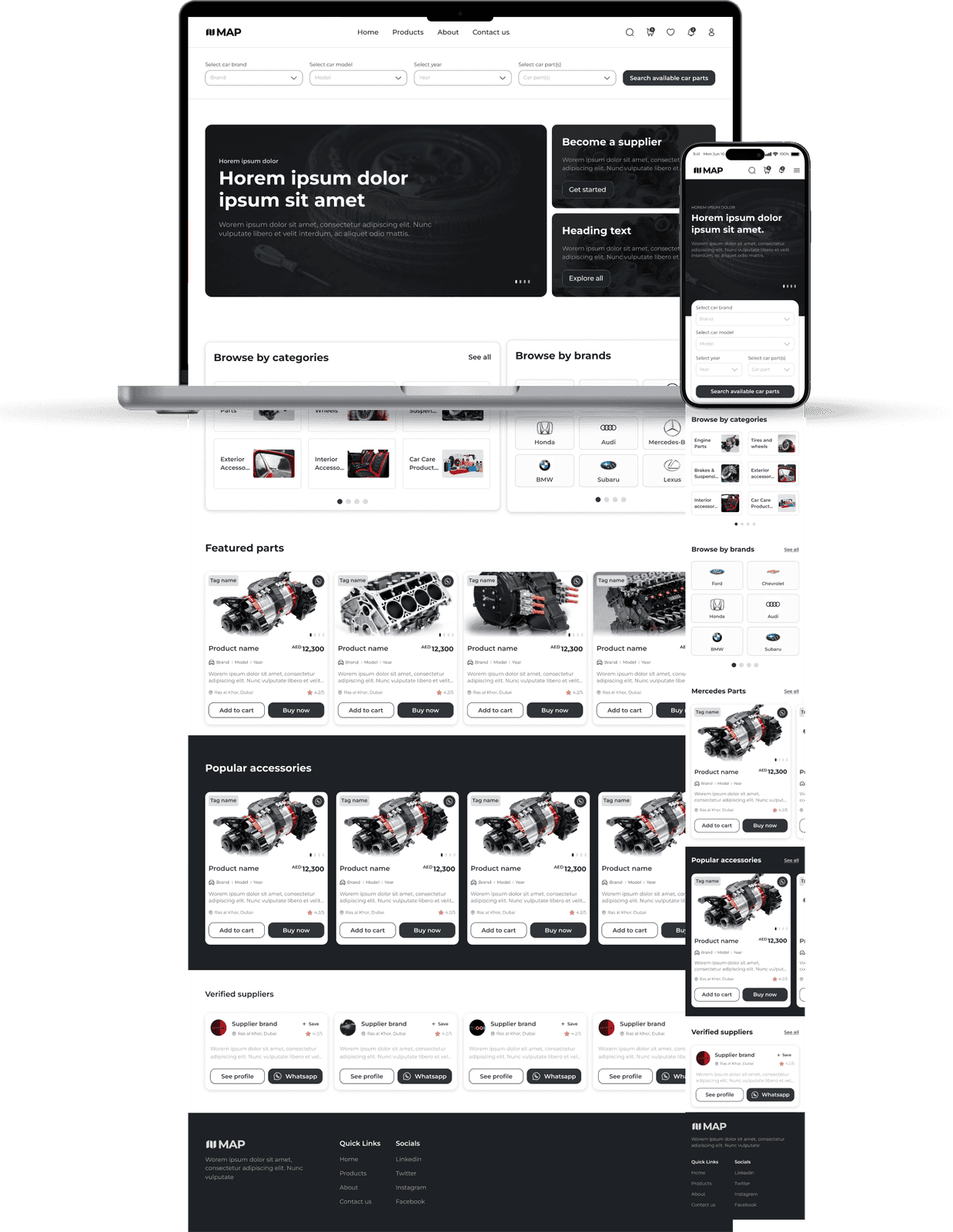
An AI-driven platform that predicts demand from historical data, so parts can be pre-ordered and are available sooner. The storefront works like a live dashboard: clear navigation, real-time updates and interactive elements that keep buyers oriented.
Two people to design for
Mechanics.
Need quick access to a wide range of parts at competitive prices, without learning a new tool.
Suppliers.
Need a way to manage inventory, predict demand and reduce overstock. They got their own product: the supplier dashboard.
Research
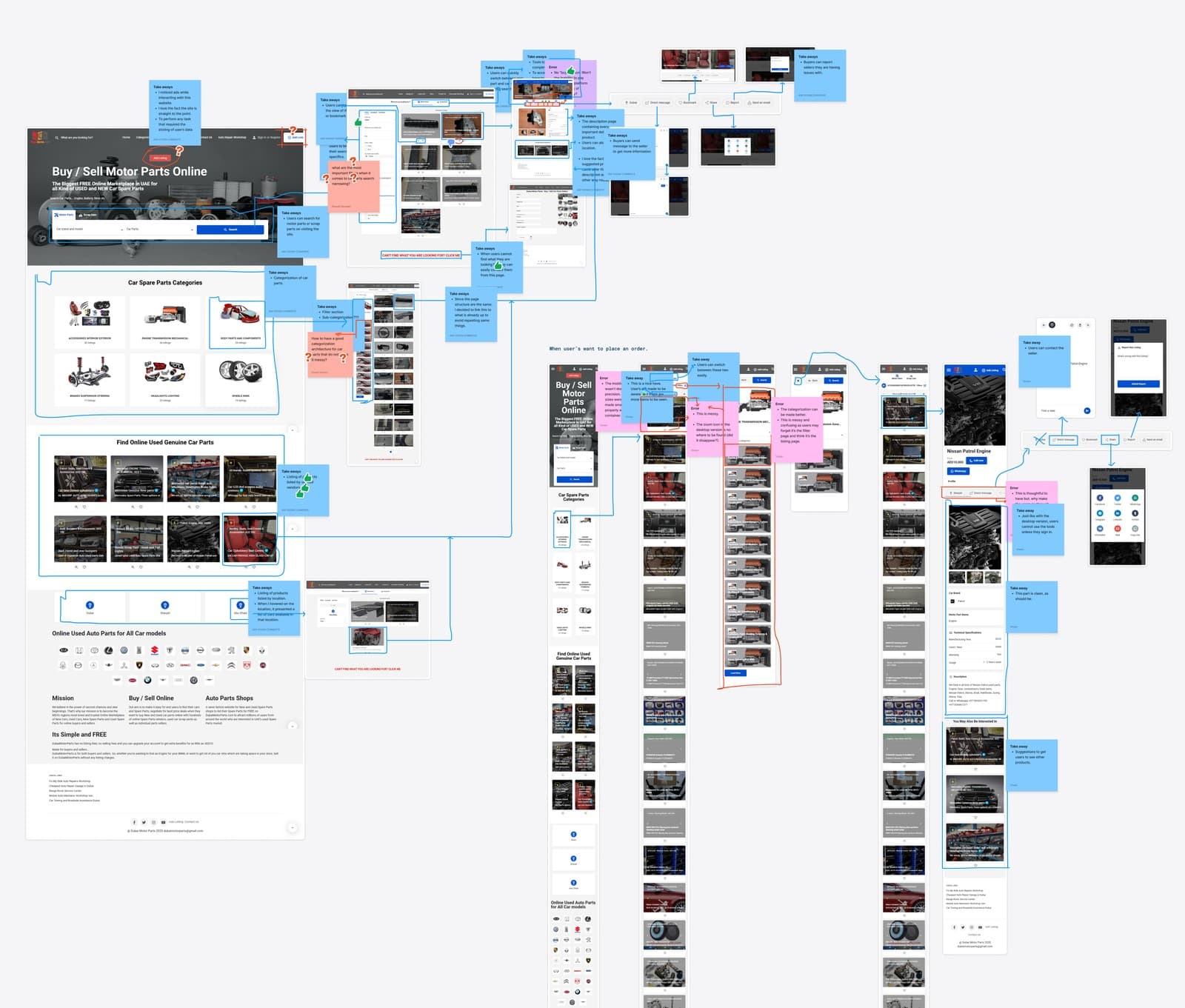
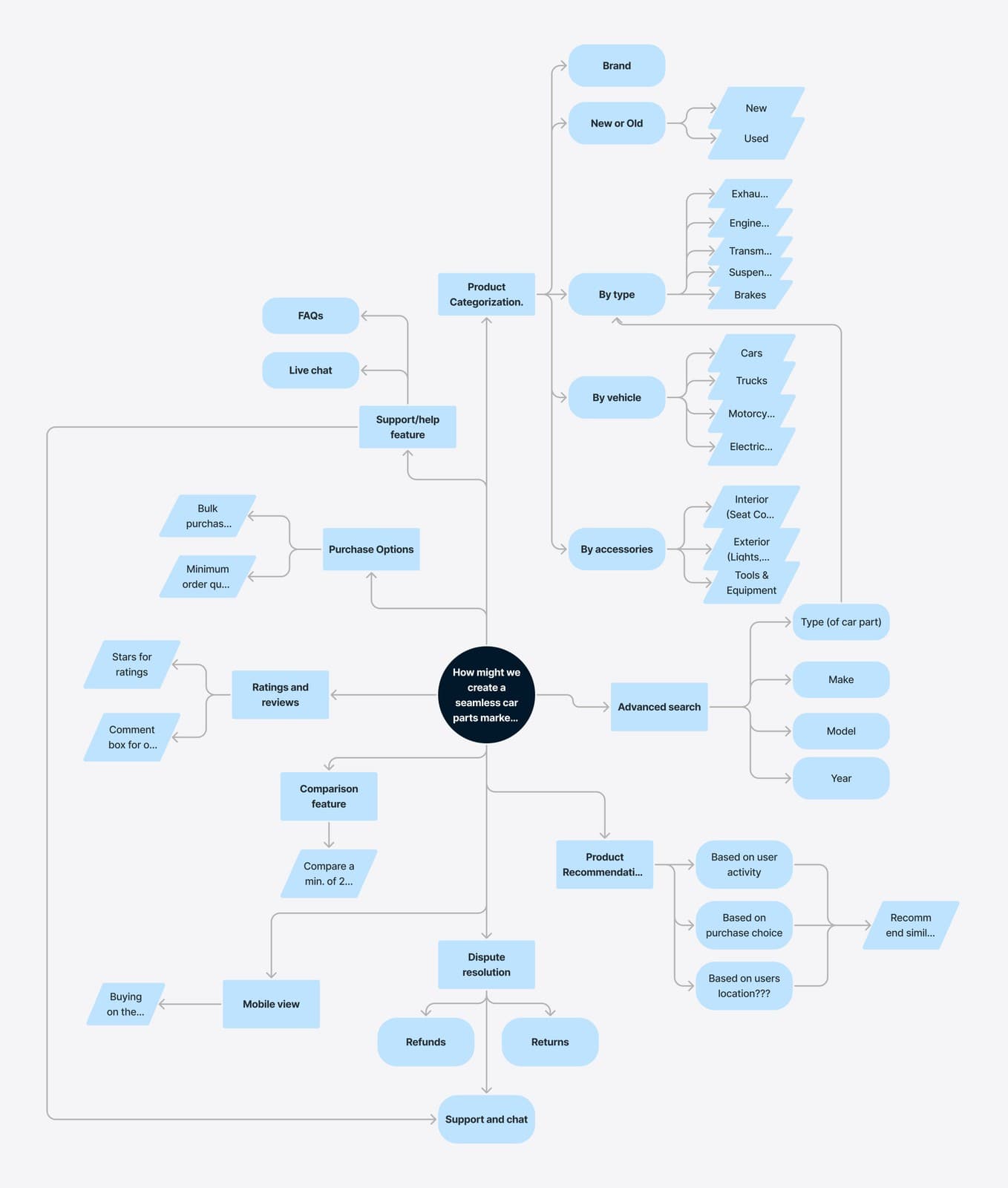
We benchmarked the direct competitors in the Emirates, dubaimotorparts.com and thepartfinder.ae, whose weak points were design and search, and the indirect ones, Alibaba and Amazon, whose detailed categorisation and advanced search set the bar. The guiding question: how might we create a car-parts marketplace that serves buyers while ensuring trust, speed and quality?
What was added
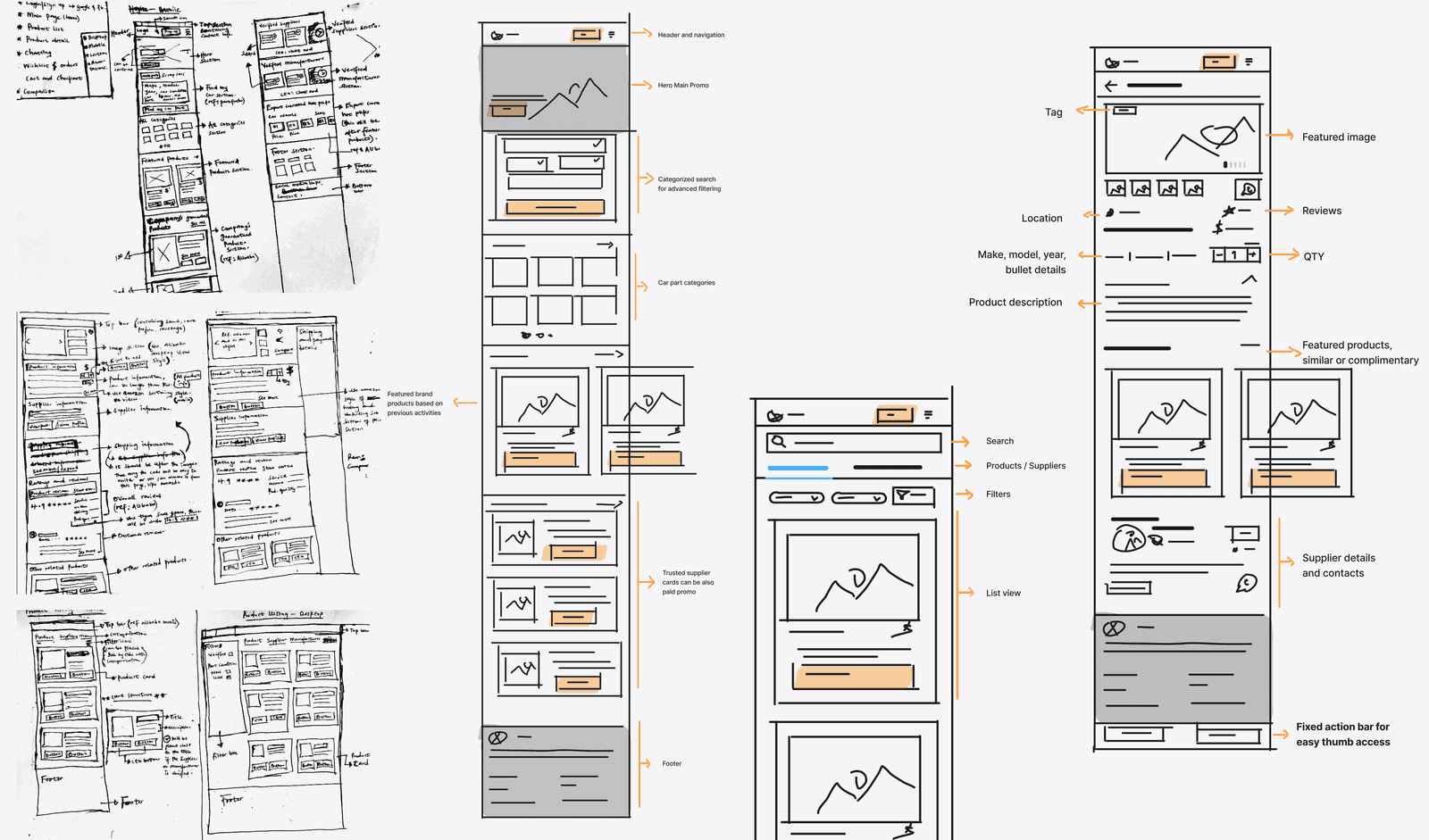
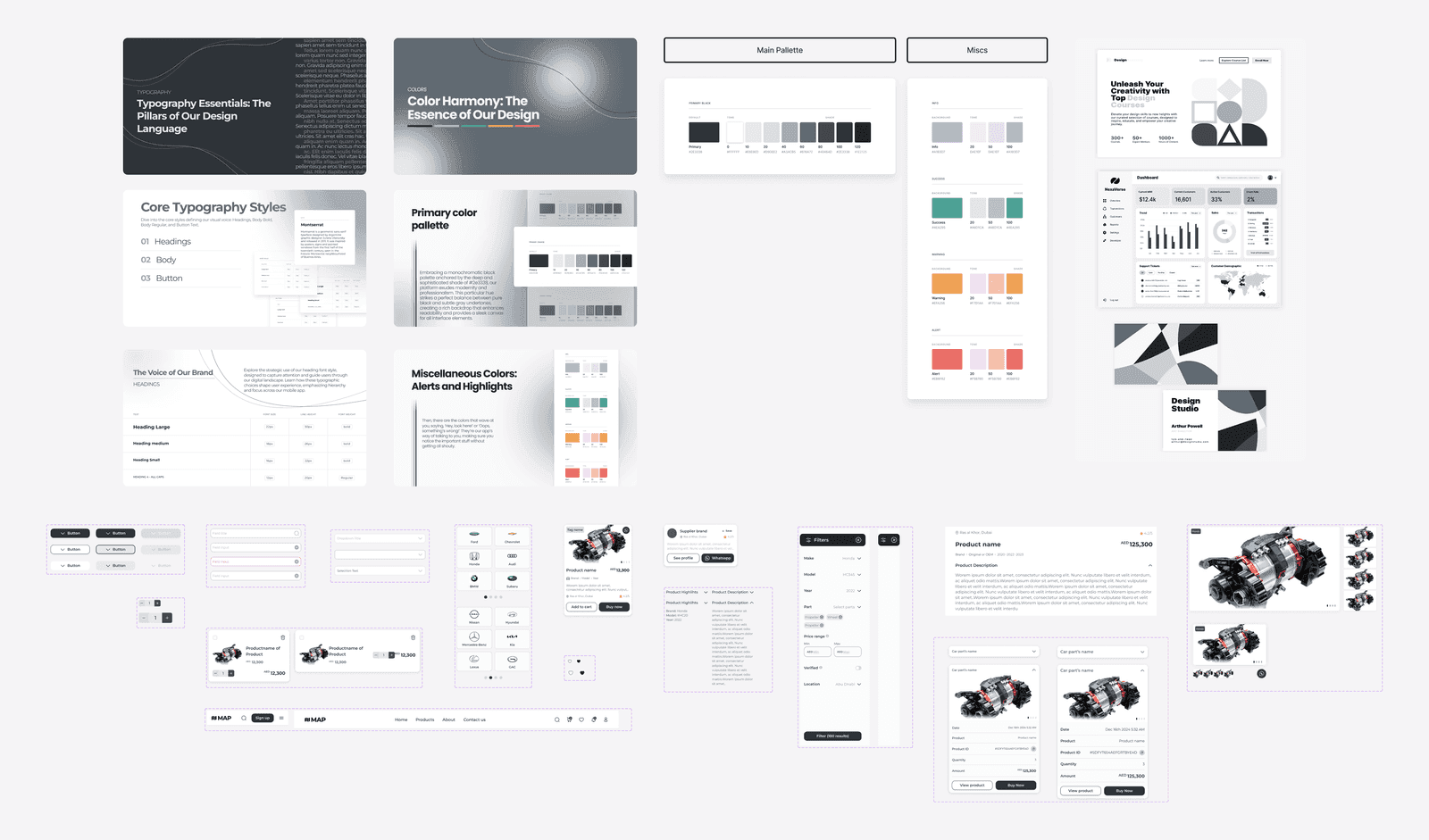
Structured categories.
Make, model, year and part type, so a mechanic drills down instead of typing.
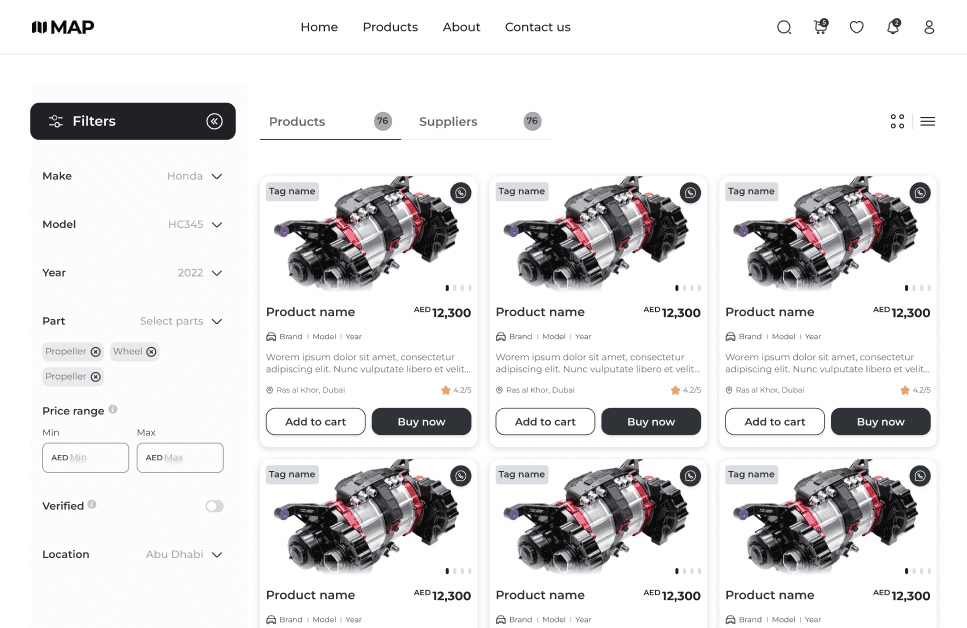
Search and comparison.
Filters that match how parts are described in a workshop, and comparison across suppliers.
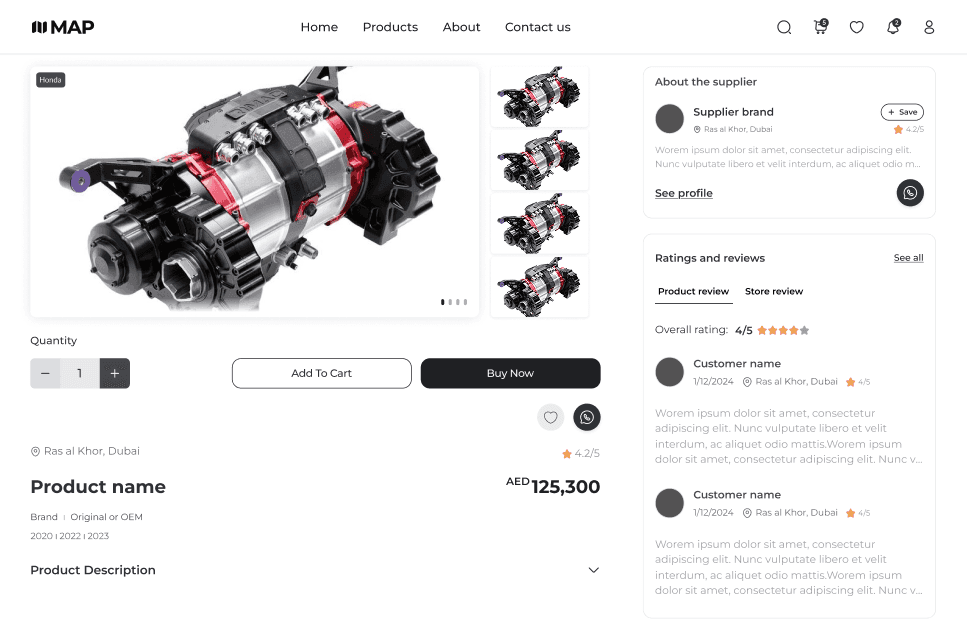
Purchase options.
Add to cart or buy now, with supplier profiles and reviews for trust.
Recommendations.
Suggested parts from the buyer's vehicle and history, and re-ordering for recurring parts.
More work
Related case studies
Have a product like this?
We reply by email to set up a call. Most projects start with a short conversation and a scoped proposal.