Traveln.ai · Client project
One dashboard for everything a destination management company does by hand.
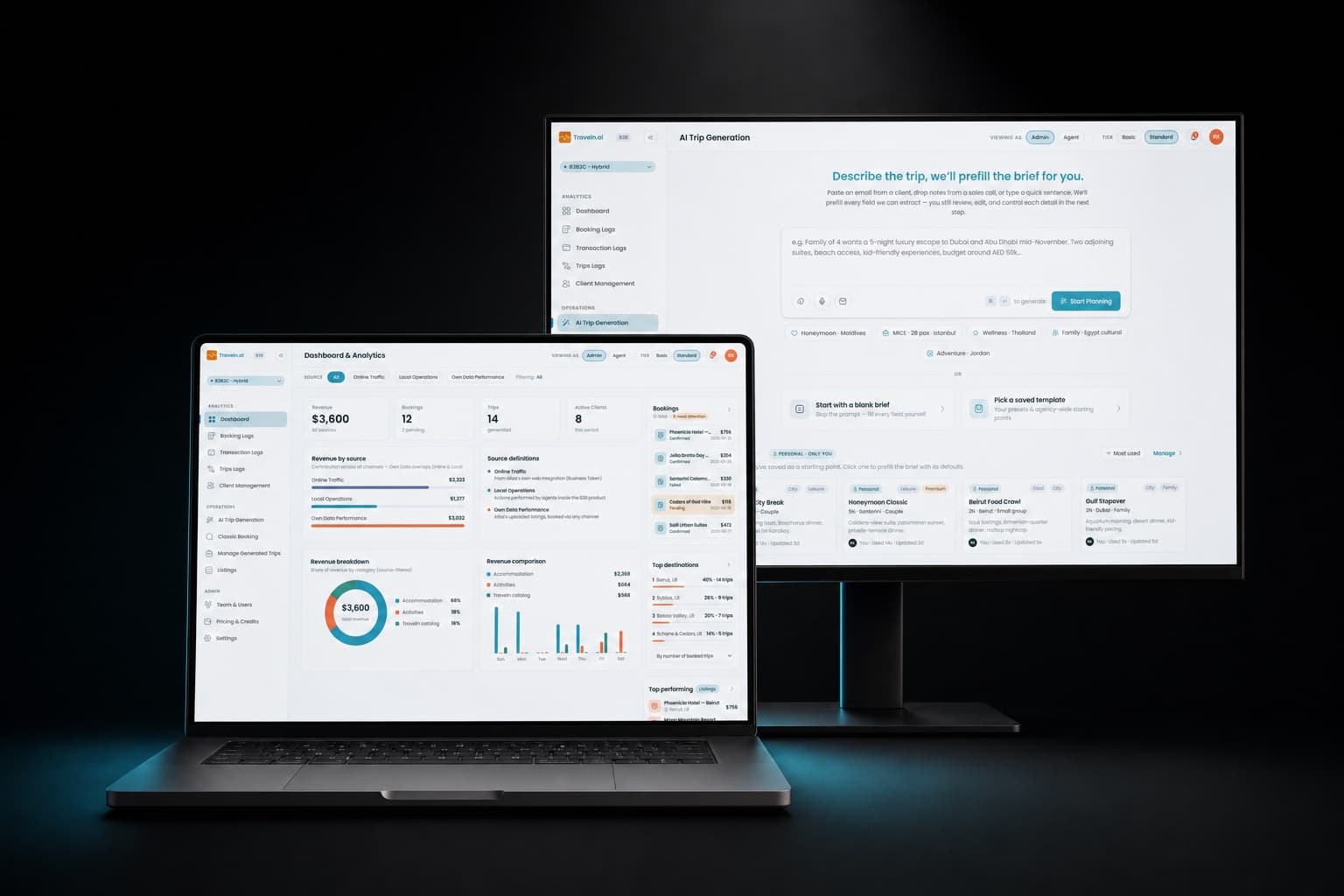
Operations dashboard for destination management companies. Bookings, clients, listings, AI trip generation and client-ready proposals in one place, designed with the operators who use it.
- Product
- SaaS and dashboard · Travel
- Role
- Lead product designer
- Scope
- Product strategy, information architecture, UX and UI, design system, interactive front-end prototype
- Platform
- B2B web application
- Year
- 2026 · In testing
The situation
After the consumer app, Traveln offers its AI trip planner as a white-label product to destination management companies and destination marketing organisations. These operators were running a live travel product with no operational cockpit: no way to track their numbers, manage inventory and clients, or coordinate their teams. Decisions ran on scattered reports and assumptions.
The problem
Everything was manual. Operators collected information by hand and over the phone, and built client documents one at a time. A day at a destination management company spans many roles: tracking bookings and revenue, managing listings and vendors, handling clients, building trips, coordinating agents. None of it lived in one place.
The brief was to bring all of it into one dashboard where an operator sees the health of the business at a glance and acts on it, without switching tools or waiting for someone else's export.
Research with real operators
We interviewed several destination management companies, including Kurban Travel and other partner agencies, who joined the work as co-development partners. The goal was not to validate a finished idea but to map their actual day and design a process that is measurably faster. Their manual reality, the phone calls and hand-built documents, decided what earned a place in the dashboard and what did not.
What was designed
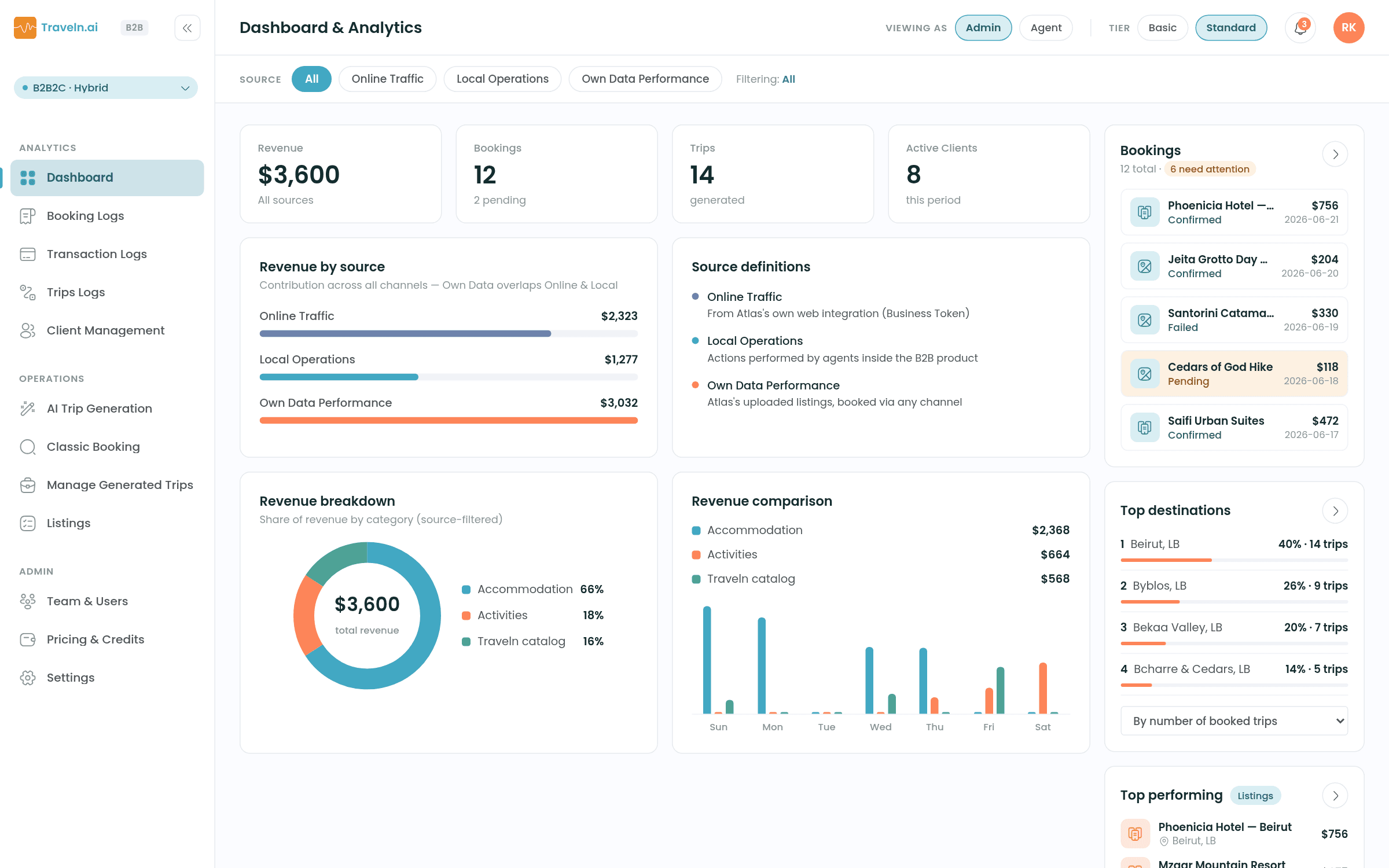
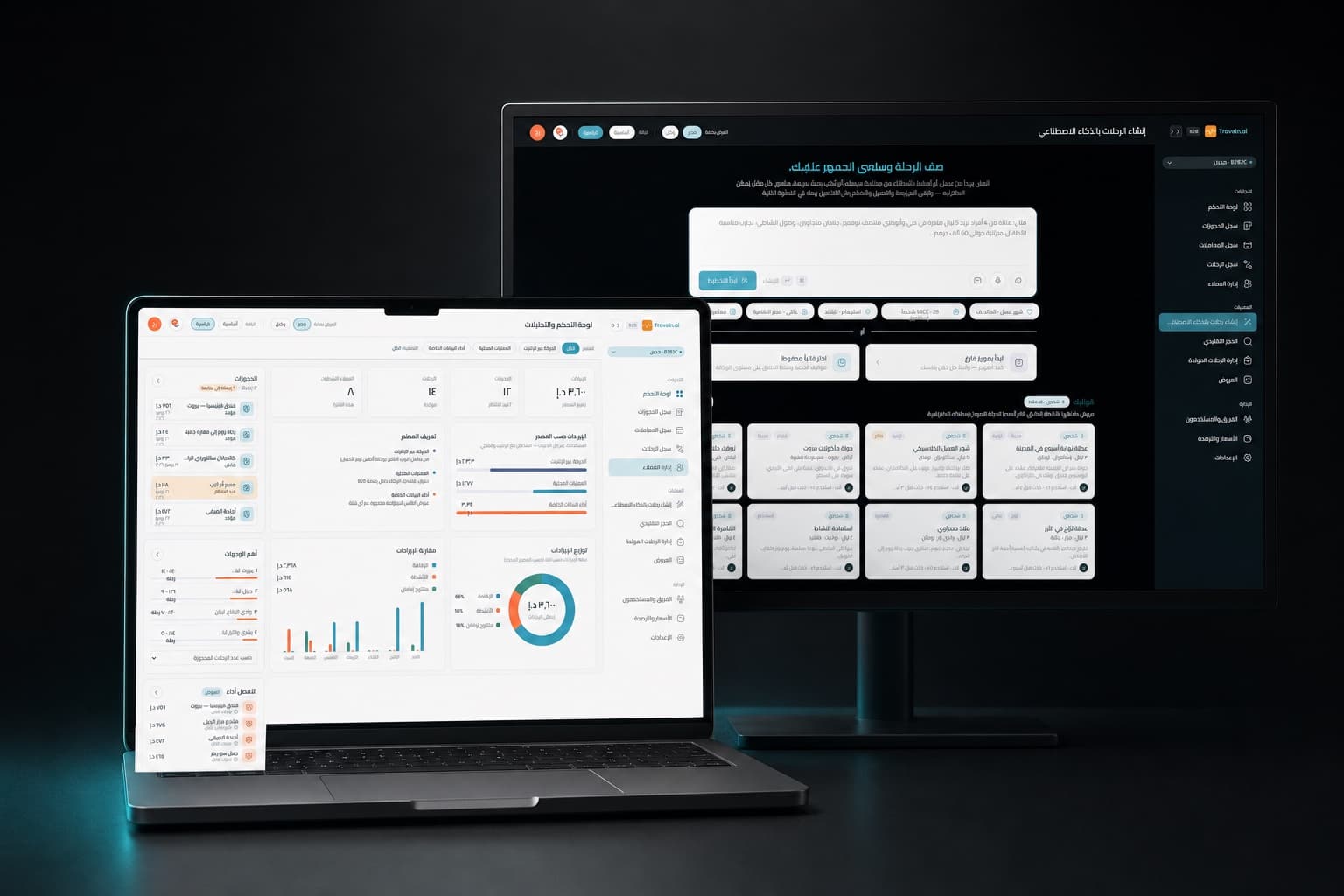
Dashboard.
KPI cards, charts and recent activity. Business health at a glance.
Logs.
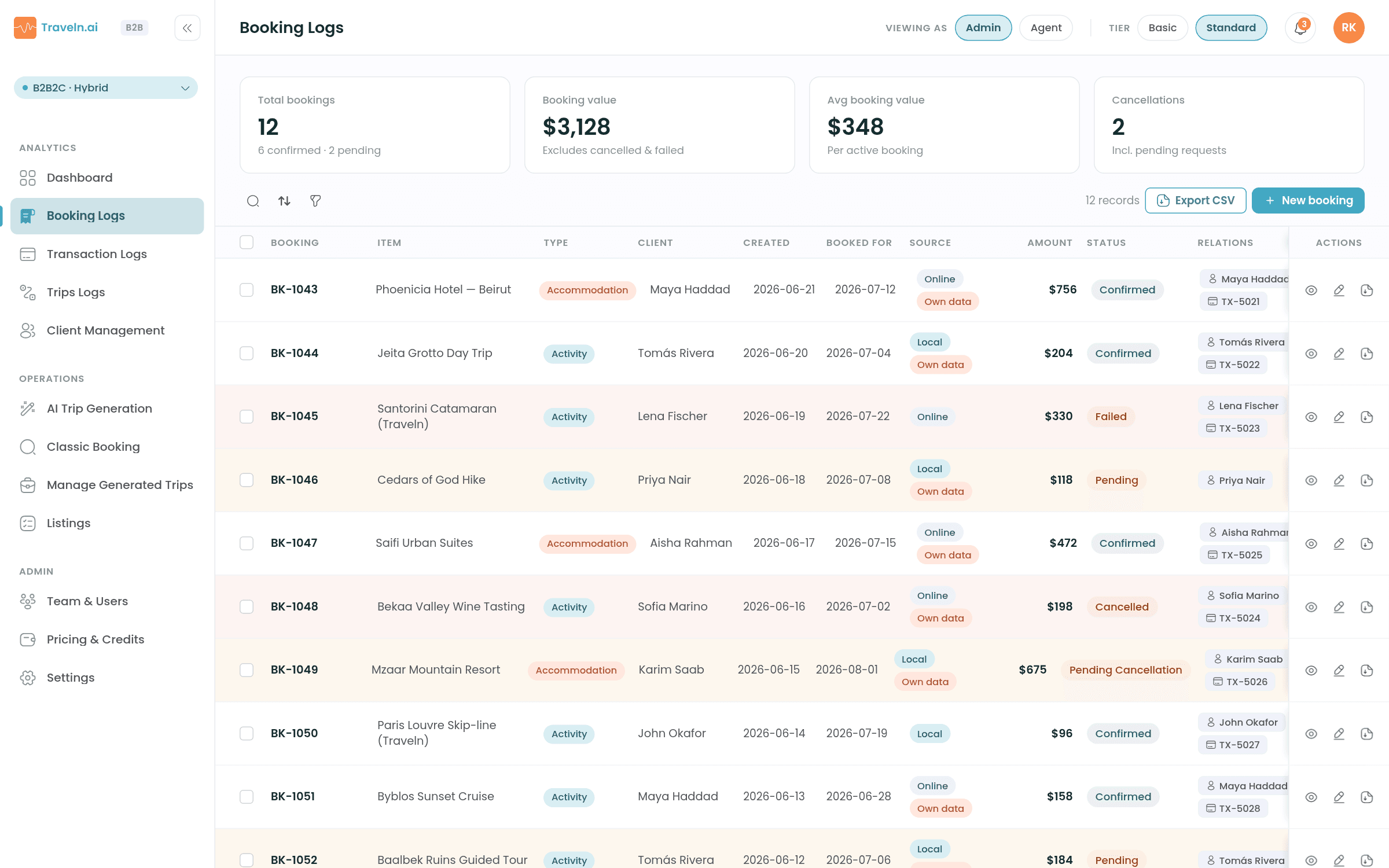
Bookings, transactions and marketplace trips in one table pattern: per-column sort and filters, search, CSV export, bulk selection and row side panels.
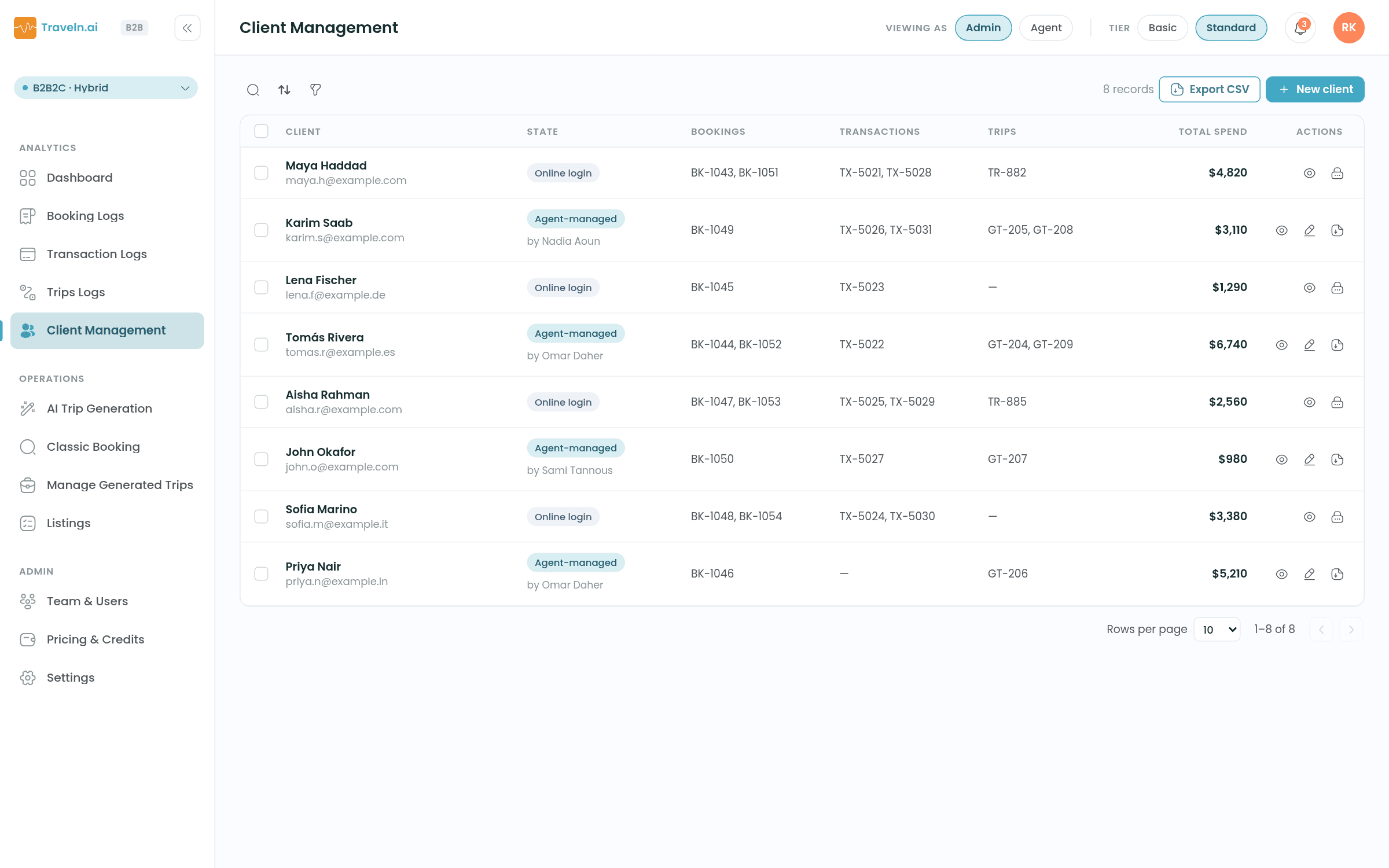
Client management.
A client table with full-profile drawers: trips, documents and spend.
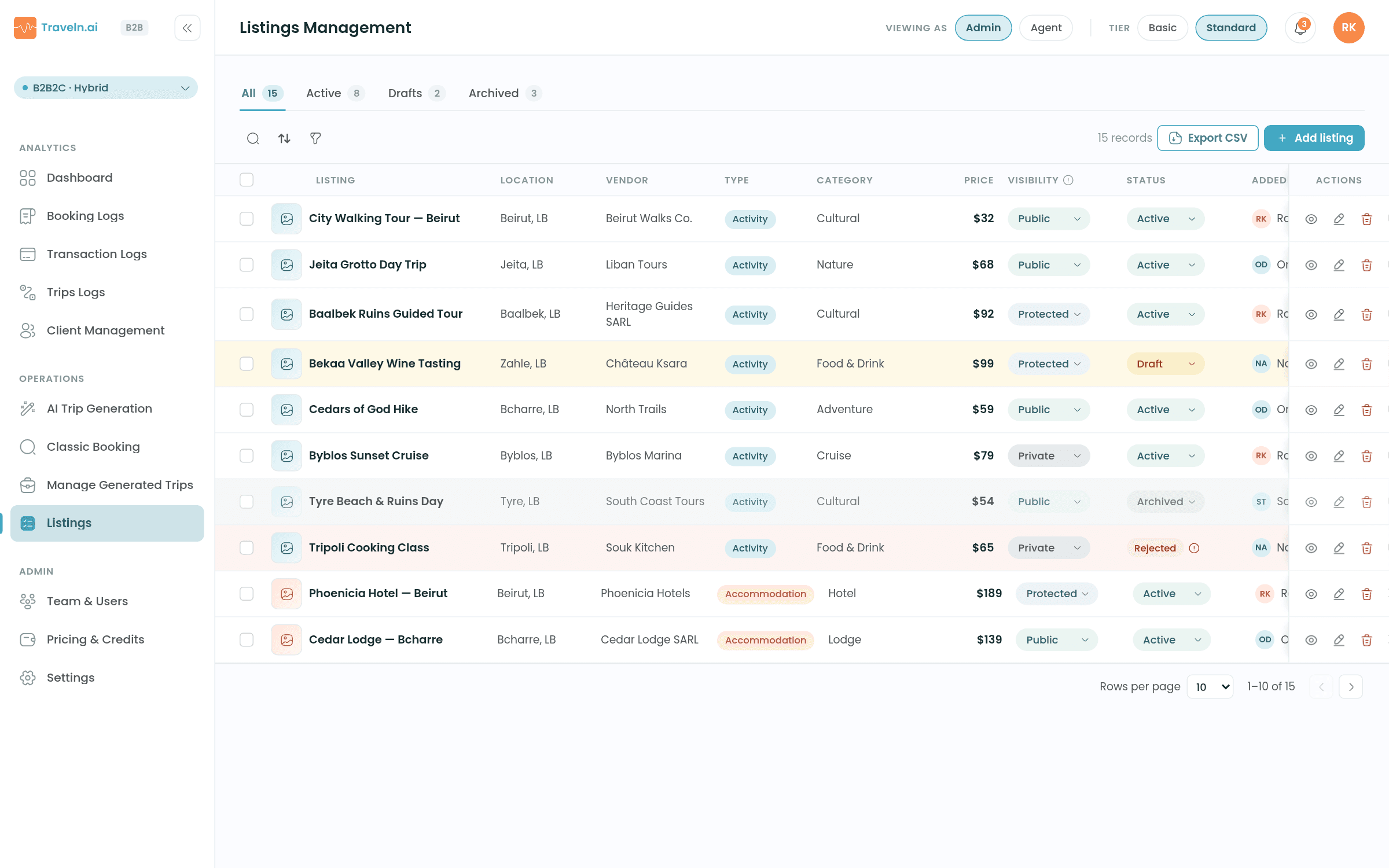
Listings.
The inventory lifecycle, with a multi-step add-listing wizard and review, approve and reject flows.
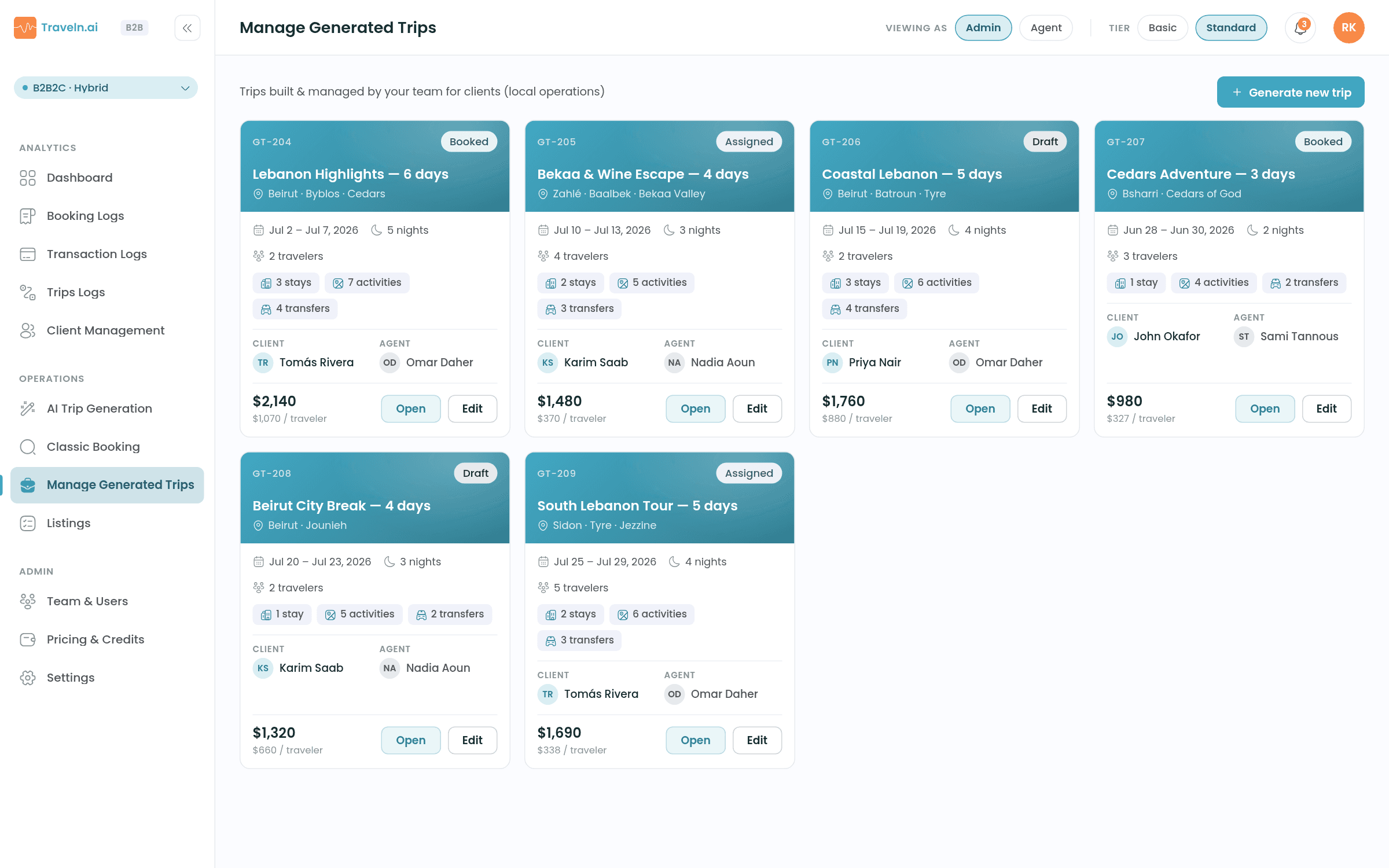
Generated trips.
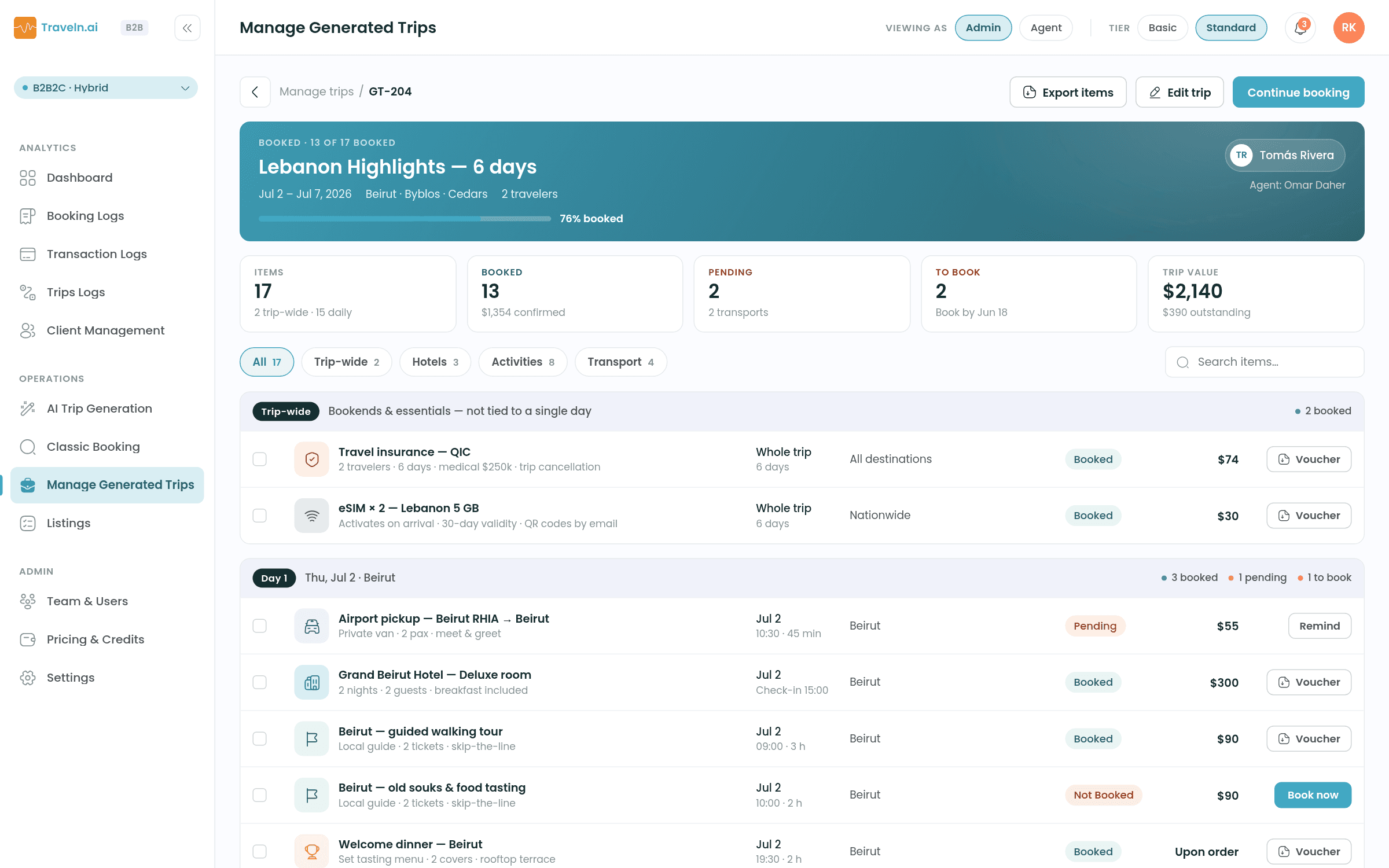
A trip card grid that opens into a full trip management screen: booking progress, live stats, day-grouped items, and item-level booking with a bulk 'Book all' action.
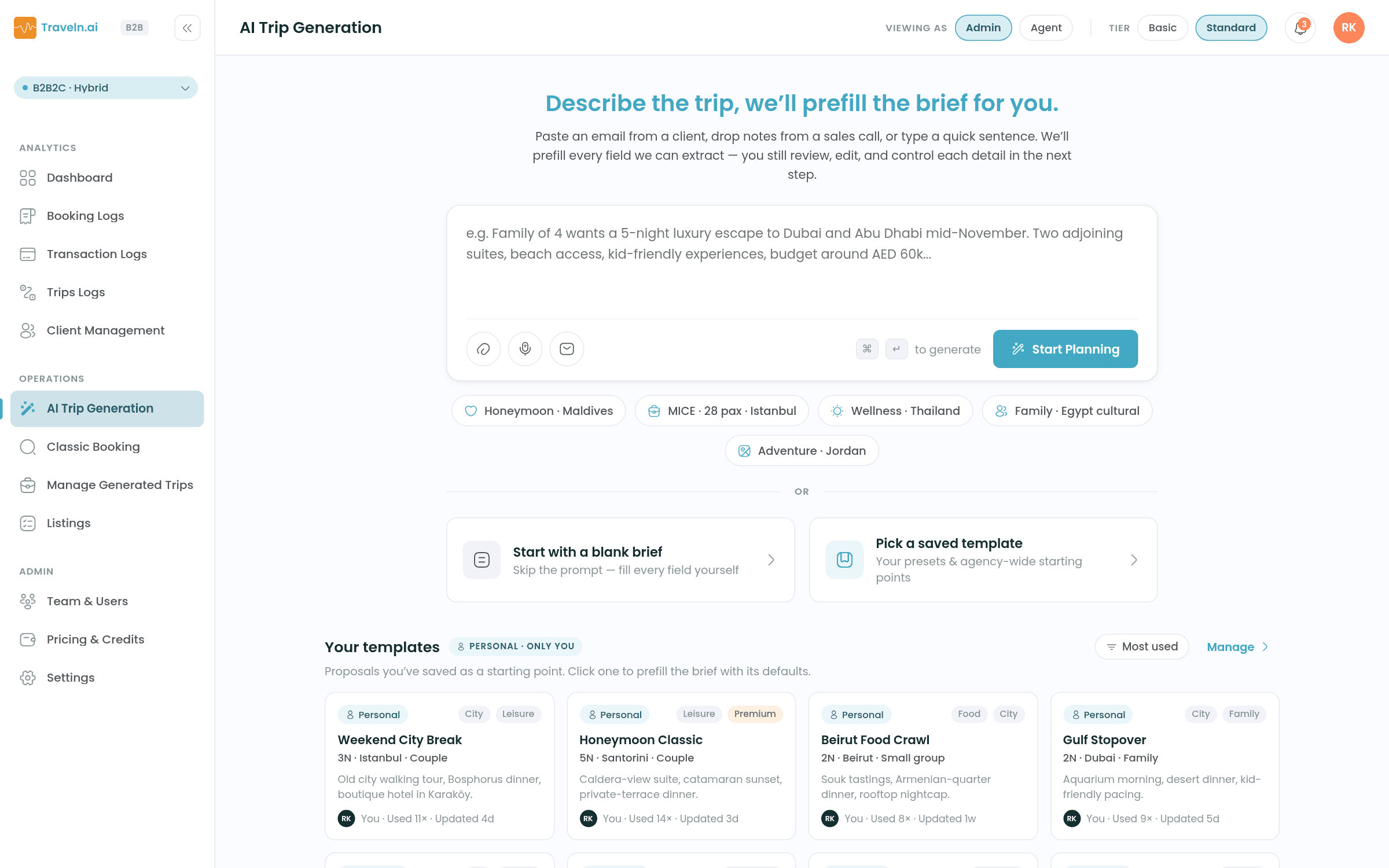
AI trip generation.
A prompt composer with shortcut chips, reusable templates, a brief wizard, and a client-ready proposal PDF.
Team, pricing and settings.
Admin controls with role-based and plan-tier visibility.
Key decisions
Role-aware by default.
Admin and agent roles and the plan tier change what is visible and possible, so the same product serves a two-person company and a large organisation without a redesign.
One table pattern everywhere.
Every log and list shares one data table system: overline headers, tabular numerals, the same filter popovers. Learn one screen and you know them all.
From tracking to acting.
Booking actions live inside the trip view, with progress updating live. Operators close the loop where they see the data.
The design system is the deliverable.
Everything is bound to the Traveln.ai design system: a full token set, an 8px spacing grid, typography, elevation and motion standards, so the product extends without breaking.
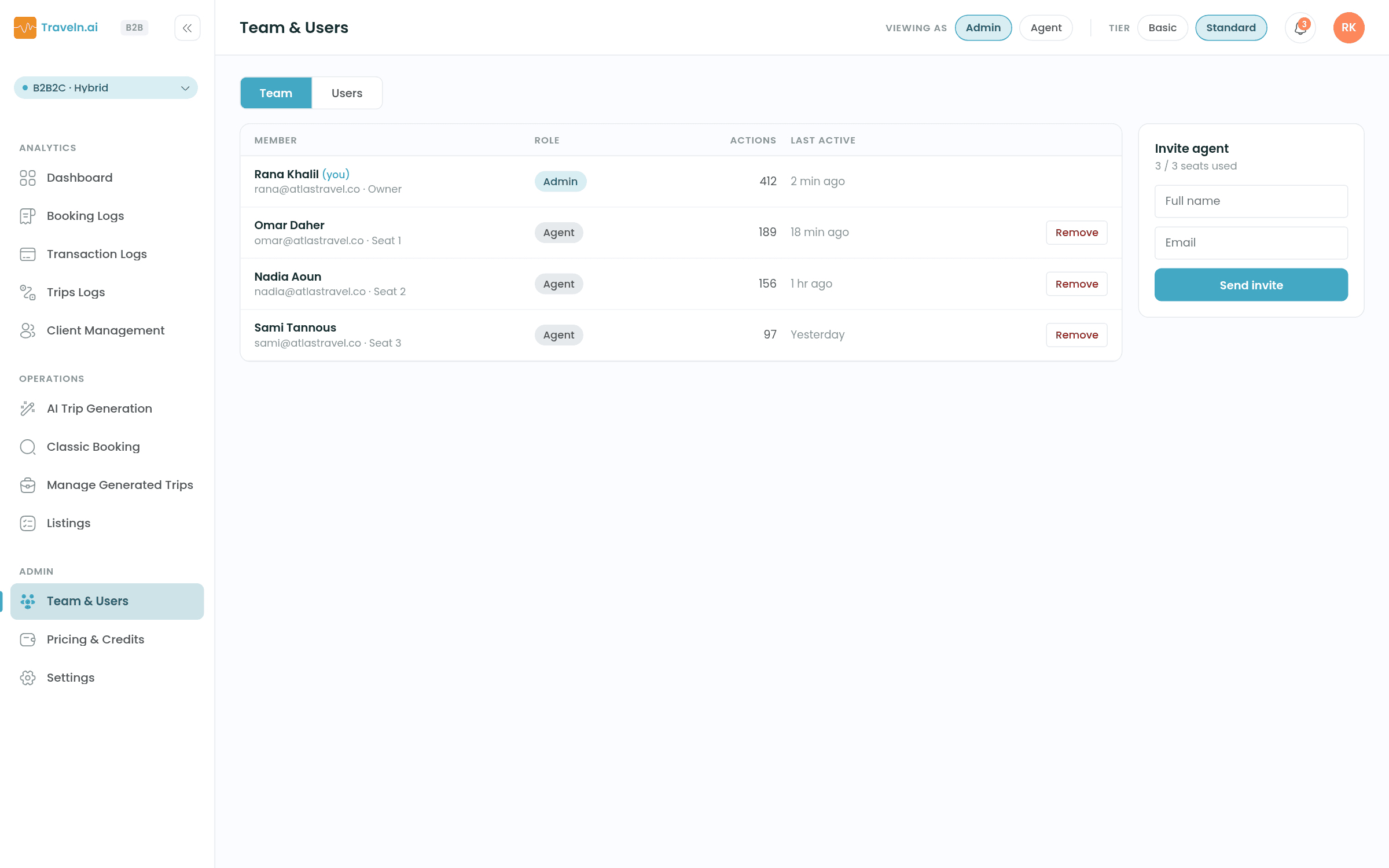
A handoff developers can build from
Delivery followed our standard: a structured Figma file with tokens and components, plus a pixel-exact interactive prototype that runs in the browser, built with AI assistance. Developers received the intended look, behaviour, states and even mock data as JSON. No guessing what 'hover state' or 'empty table' means.
Where it stands
The product is in testing with partner companies ahead of launch. The work that used to happen by hand and by phone, from collecting booking data to building client documents, now runs through one dashboard: from an AI-generated trip to a client-ready proposal in one flow. Adoption numbers follow the launch.
Services in this project
What we did
- AI product designChat, copilot, agent and generative interfaces people can follow and correct.→
- Dynamic design systemsComponents, states and rules for interfaces a model assembles at run time.→
- SaaS and dashboard designWeb platforms, admin panels and data-heavy dashboards.→
- Full-stack developmentWe build what we design, front end and back end.→
More work
Related case studies
Have a product like this?
We reply by email to set up a call. Most projects start with a short conversation and a scoped proposal.